Starting tomatoes indoors gives U.S. gardeners a head start before outdoor planting weather arrives. The key is to time sowing from your local frost date, give seedlings strong light, and move them outside gradually.
When to start
Sow tomato seeds about five to six weeks before you expect to transplant outdoors. Check the average last frost date for your ZIP code, then plan to set plants outside only after frost danger has passed and the soil has warmed. Starting too early can leave you with tall, crowded seedlings.
What you need
- Tomato seeds suited to your growing space
- Clean seed trays or small pots with drainage holes
- Fresh seed-starting mix and a tray to catch water
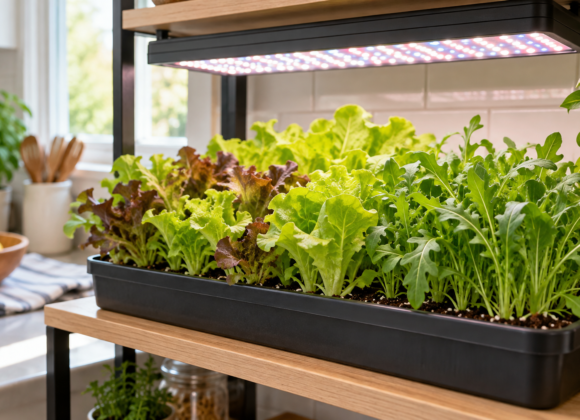
- A bright LED grow light or fluorescent fixture
- Plant labels and a gentle watering can
Sow and care for seedlings
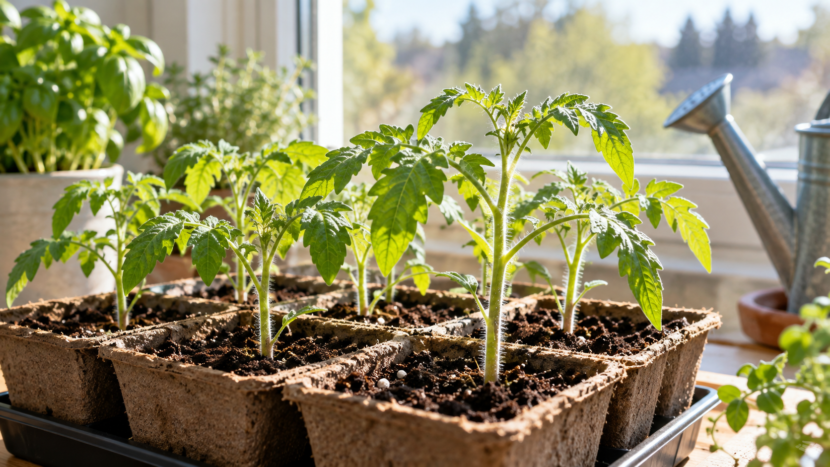
Moisten the mix, sow one seed per cell, and cover lightly according to the packet. Keep the mix damp but not waterlogged. Once seedlings appear, place them under a grow light for roughly 14 to 16 hours daily. Follow the light maker’s distance guidance and raise the fixture as plants grow. A windowsill can be useful, but weak light often produces leggy transplants.
When roots fill the cells, move the seedlings to slightly larger pots. Handle them by their leaves rather than squeezing delicate stems. Water when the surface begins to dry and keep air moving around the plants.
Move plants outdoors
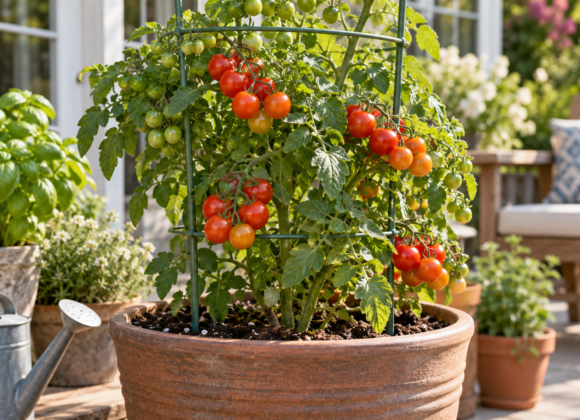
Before transplanting, gradually introduce seedlings to outdoor sun and wind over several days. Bring tender plants inside if a cold night is expected. Once the weather is reliably warm, plant them in a sunny bed or a large container with support. For a small-space setup, read our container tomato guide.
Sources: University of Maryland Extension seed-starting guide and transplant guide.