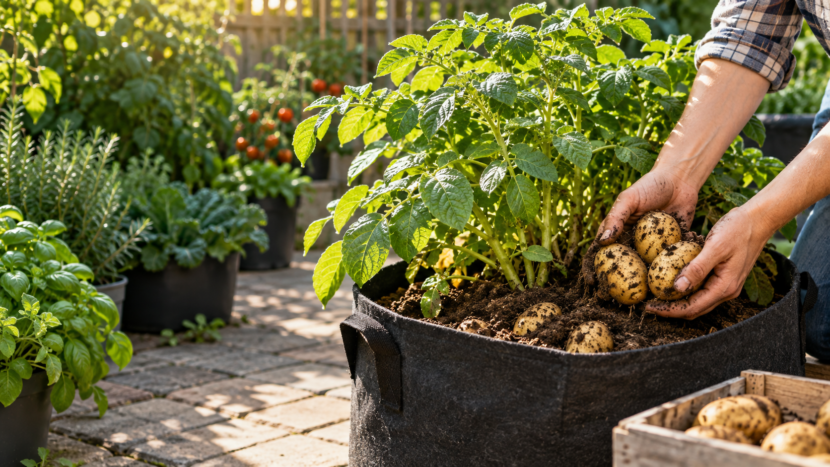
No garden bed? A large container or fabric grow bag can give potatoes the loose soil they need while keeping the harvest close to your patio.
Start with the right setup
Choose certified disease-free seed potatoes and a roomy container with drainage holes. Fill the bottom with several inches of quality potting mix. Set the seed pieces sprout side up, then cover lightly with more mix. Place the container where it receives at least six hours of sun.
Care through the season
Keep the mix evenly moist, never waterlogged. As stems grow, add more potting mix around them while leaving the upper leaves exposed. This keeps developing tubers covered; potatoes exposed to light can turn green. Check moisture often because containers dry faster than garden beds.
Harvest
For small new potatoes, gently feel around the plant after it flowers. For a larger storage harvest, wait until the foliage yellows and dies back, then empty the container carefully. Let potatoes dry and brush off loose soil before storing them in a cool, dark place.
Timing varies by climate and variety, so use your local U.S. Cooperative Extension planting calendar. Learn more from University of Minnesota Extension.
Choose the right container size
Growing potatoes in containers starts with choosing a container that is big enough for the tubers to form. A 5-gallon container is the minimum for one seed piece. A 10-gallon container can hold two seed pieces with room to hill, and a 15- to 20-gallon container can hold three or four, spaced about 10 to 12 inches apart. Small pots are the most common mistake with container potatoes: the plants grow, but the tubers run out of room and stay tiny. Whatever size you choose, make sure the container has drainage holes, because potatoes sitting in wet soil will rot.
Soil mix for container potatoes
Use a loose potting mix, not garden soil. Garden soil packs down in a container, holds too much water, and can carry soil-borne disease. A bagged potting mix made for vegetables, mixed with finished compost, gives roots the loose, well-drained mix potatoes need. Fill the container about one-third full to start, so you have room to add more mix as the plants grow. University of Minnesota Extension and Utah State University Extension both advise starting with certified seed potatoes and loose, well-drained soil, and the same advice applies in a container.
Watering container potatoes
Containers dry out faster than garden beds, especially in sun and wind, so check the mix often. Water when the top inch of mix feels dry, and water slowly until a little drains from the bottom. The goal is evenly moist mix, never soggy and never bone dry. Mulching the top of the container with straw or shredded leaves helps hold moisture, but keep the mulch off the stems. In hot weather a large container may need water every day, while a small one may need it twice a day.
Hilling in containers
Hilling works the same way in a container as it does in a bed. When the stems are about 6 inches tall, add a few inches of potting mix around them, leaving the top leaves exposed. Repeat as the plants grow, until the mix is a few inches below the rim. The covered stems form extra tubers, and keeping tubers covered keeps them from turning green in the light. For the exact depth and spacing the plants need, see our guide on how deep to plant potatoes – those measurements apply in a container too.
Grow bags vs pots
Fabric grow bags and hard pots both work well, with different trade-offs. Grow bags let air reach the roots, drain freely, and are easy to empty at harvest: just tip the bag out onto a tarp. They dry out faster, so they need more frequent watering. Hard plastic or wood pots hold moisture longer and last for years, but they need clear drainage holes and can be heavy to move once they are filled. Whichever you use, the size matters more than the material: a 5-gallon container is the minimum, and bigger is better for yield.
A note on straw and no-dig potatoes
You may have heard of the straw or no-dig method, where seed potatoes are laid on the ground and covered with a thick layer of straw instead of being buried. It is a real method for ground beds, but it is not a container method: straw does not hold moisture or nutrients the way potting mix does, and tubers in straw stay exposed and can turn green. In a container, stick with potting mix and hilling. If you do want to try straw on open ground, plant the seed on the soil surface and cover it with a thick, even layer of clean straw, then keep it moist.
Once you have the container steps down, the rest of the process is the same as planting in the ground. For timing by zone, last frost dates and the full planting steps, see our step-by-step guide on how to plant potatoes.