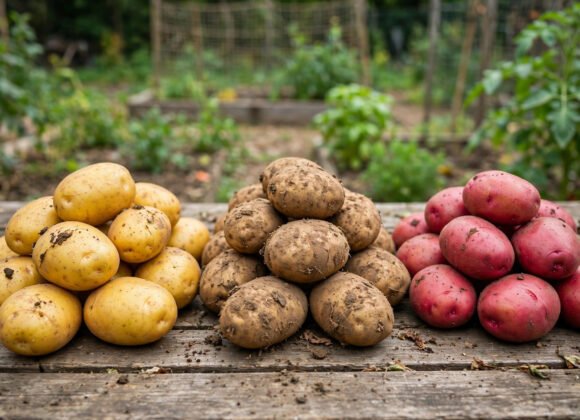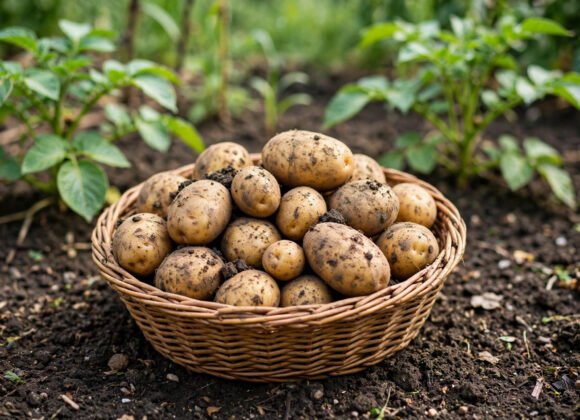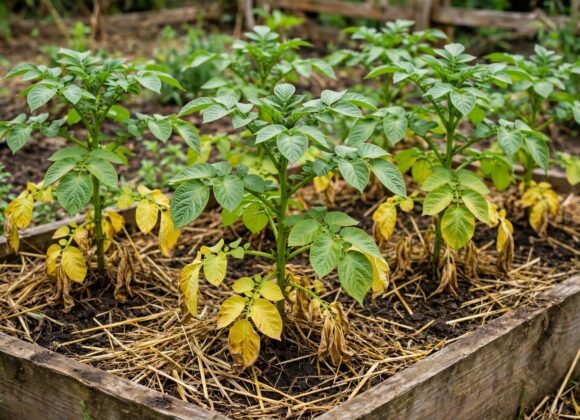

Fingerling potatoes are small, long and full of flavour, and they grow just as easily as any other potato in a home garden. They need the same loose soil, the same full sun and the same steady water as a russet or a red potato, and they repay a little care with a harvest of firm, waxy tubers that hold their shape when roasted. This guide covers how to grow fingerling potatoes from certified seed to harvest, including the best varieties, the spacing they need, container growing and storage.
Table of Contents
Are fingerling potatoes easy to grow?
Yes, fingerling potatoes are easy to grow, and a beginner who has never grown potatoes before can succeed with them. They are ordinary potatoes in their needs, so if you can grow a red potato, you can grow a fingerling. The plants need full sun, loose and well drained soil, steady water and regular hilling, and the same planting steps that work for other potatoes work for fingerlings too.
The one difference is patience, because most fingerling varieties are midseason to late season types, so they take longer to mature than an early variety. If you plant them on time and keep the soil moist while the tubers fill out, the plants do most of the work themselves.
Our step by step guide on how to plant potatoes covers the full method, and the notes below explain the small details that matter for fingerlings.
What are fingerling potatoes?
Fingerling potatoes are potato varieties that naturally grow small, narrow and elongated tubers, usually about 2 to 4 inches long, with a shape a little like a finger. They are not regular potatoes dug up too early, and that distinction matters. A new potato is any variety harvested young, before its skin has thickened, while a fingerling is a variety that stays small and slender even when it is fully mature. The flesh is waxy and firm, so fingerling potatoes hold together when they are boiled or roasted instead of falling apart, and that firm texture is the reason cooks prize them for roasting and salads.
The University of Minnesota Extension lists fingerling types alongside russets, reds, whites and purples as one of the main potato types, and it notes that waxy potatoes hold together in soups, curries and salads. Fingerling potatoes come in several colours, from yellow skin with yellow flesh to rose red skin with yellow flesh and even deep purple skin with purple flesh. The colour is natural, and it comes from the same pigments that colour other vegetables. A fingerling that looks purple is a cousin of the purple potatoes in our guide on purple potatoes, and Purple Peruvian is a fingerling variety as well as a purple variety.
Fingerling potato varieties to try first
Three varieties are the safest first choice, because seed is easy to find and all three store well. Cornell University’s vegetable variety database rates all three as good for storage, and it rates all three as resistant to common scab, which is a useful bonus for a beginner.
| Variety | Skin | Flesh | Maturity | Storage |
|---|---|---|---|---|
| French Fingerling | Rose red, smooth | Yellow, waxy | Midseason to late | Good |
| Russian Banana | Yellow, buff | Light yellow, waxy | Late | Good |
| Rose Finn Apple | Beige with a rose blush | Bright yellow, waxy | Midseason to late | Good |
French Fingerling is the best all rounder for a first try, because it is productive, it holds its shape well, and its smooth rose red skin and yellow flesh look good on the plate. Russian Banana is the classic roasting fingerling, with a buttery flavour and a curved shape that gives the group its name, and it is a late variety, so it needs the longest season of the three. Rose Finn Apple is an old heirloom with a knobby shape and a nutty flavour, and it does well in cooler gardens.
Purple Peruvian is worth adding if you want colour, because it has deep purple skin and flesh and the same fingerling shape, and it needs a long season too. Start with one variety in your first year, and add a second one once you know how long your season runs. Our guide on early, midseason and late potatoes explains the maturity classes and how to match a variety to the length of your season.
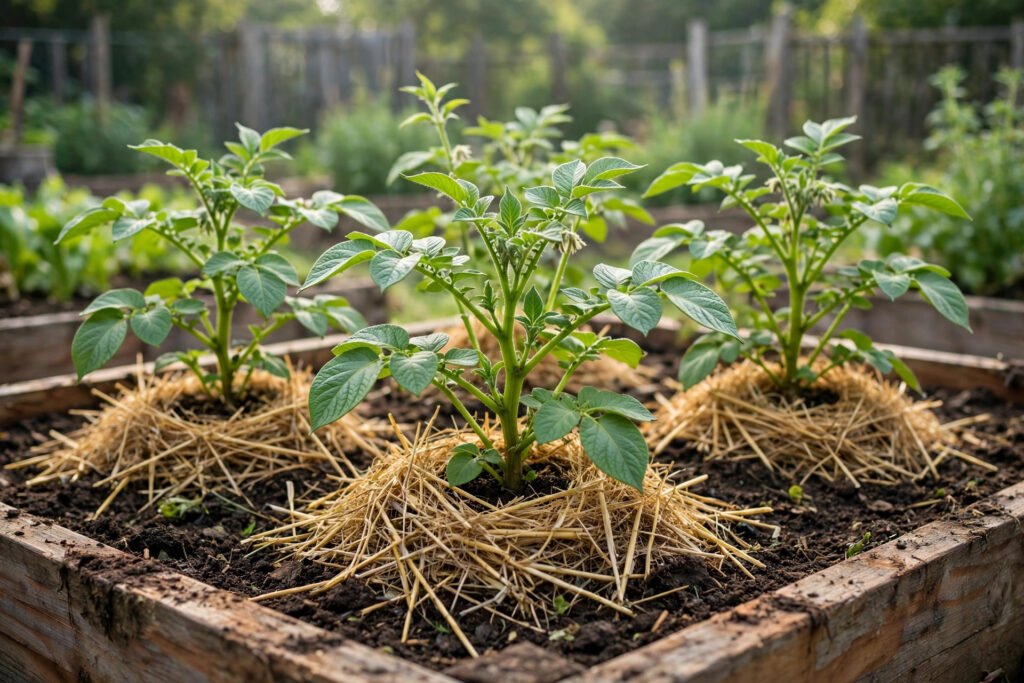
How to plant fingerling potatoes
Planting fingerling potatoes follows the same steps as planting any potato, and the full method is in our guide on how to plant potatoes. The steps below are the short version with the fingerling details included.
Start with certified seed potatoes from a garden centre or seed supplier, because certified seed is grown to reduce disease, while grocery store potatoes may carry disease and are often treated to stop sprouting. The University of Minnesota Extension, Utah State University Extension and Kansas State University Extension all give the same advice, and it matters more for fingerlings than for common varieties, because fingerling seed is often saved and replanted, which lets disease build up over the years.
Small tubers about the size of an egg can be planted whole, and that is the easiest way to plant fingerling potatoes, because most fingerling seed tubers are already small. Cut larger tubers so each piece weighs about 1.5 to 2 ounces and has one or two eyes, using a clean knife, and let the cut pieces dry for one to three days until the cut surface has callused over. Our guide on how to prepare seed potatoes covers chitting and cutting in detail, including the curing step.
Time planting by soil temperature, not by the calendar date. Plant when the soil 4 to 6 inches deep is consistently 45 to 50 degrees Fahrenheit and workable, which is usually two to four weeks before your last expected spring frost. If you plant too early, while the soil is still cold and wet, the seed pieces rot, the shoots come up slowly and unevenly, and the risk of disease goes up. If you plant too late, the plants run into summer heat, tuber formation slows down, and the yield drops, and that hurts fingerlings more than early varieties because they need a long season.
Choose a spot with at least six hours of direct sun and loose, well drained soil, and work compost into the top few inches. Fingerling potatoes prefer slightly acidic soil, around pH 5.8 to 6.5, like other potatoes, and a soil test through your Extension lab is the best way to know what your soil needs. Do not plant potatoes where tomatoes, peppers or eggplants grew last year, because they are all nightshades and they share diseases, so rotate to a different bed each year.
Plant the seed pieces 4 to 6 inches deep and 10 to 12 inches apart in rows 30 to 36 inches apart, with the eyes facing up. The University of Minnesota Extension gives the same spacing, at 10 to 12 inches apart in the row with rows 30 to 36 inches apart, and Utah State University Extension gives the same figures. Cover with a few inches of loose soil at first, then add more soil as the plants grow, and water lightly after planting so the soil stays moist but never soggy.
Fingerling potato spacing: do they need different spacing?
Fingerling potatoes do not need different spacing from other potatoes, and the standard spacing of 10 to 12 inches apart in the row works well for them. The University of Minnesota Extension adds a useful point, because it says you can space pieces closer for smaller tubers and farther apart for fewer but larger tubers, and that rule is handy for fingerlings. If you want mostly finger sized tubers, plant at 8 to 10 inches apart, and the plants will make a larger number of small tubers. If you want the tubers a little larger, plant at 12 inches apart and give each plant more room.
Rows should stay 30 to 36 inches apart either way, because you need room to walk, hill and harvest without stepping on the plants. Crowding the plants closer than 8 inches does not help, because the plants compete for water and nutrients, and the result is many tiny tubers that are hardly worth digging. Spacing is one of the easiest levers on the harvest, and it costs nothing to get right.
Growing fingerling potatoes in containers
Fingerling potatoes grow well in containers, and they are a good choice for a patio or a small garden, because the tubers stay small and the plants do not need as much soil depth as a large baking variety. Use a container that holds at least 5 gallons for one seed piece, a 10 gallon container for two seed pieces, and a 15 to 20 gallon container for three or four seed pieces spaced about 10 to 12 inches apart. Our guide on how to grow potatoes in containers covers container size, soil mix and watering in detail, and the same rules apply to fingerlings.
Fill the container about one third full of loose potting mix to start, set the seed pieces sprout side up, and cover them with a few inches of mix. As the stems grow, add more mix around them, leaving the top leaves exposed, until the mix is a few inches below the rim.
Containers dry out faster than garden beds, so check the mix often and water when the top inch feels dry. Fabric grow bags work well for fingerling potatoes, because they drain freely and are easy to tip out at harvest, but they dry out faster, so they need more frequent watering. One seed piece per large grow bag is a better plan than three, because the single plant gets the whole bag to itself.
Watering and hilling fingerling potatoes
Fingerling potatoes need steady water while the tubers are forming, and a bed that swings between soaked and bone dry will give you knobby, cracked or small tubers. Utah State University Extension says to apply 1 to 2 inches of water per week, and the University of Minnesota Extension suggests about an inch of water per week, with more often in sandy soil.
Water deeply so the moisture reaches the top foot of soil, and mulch with a few inches of straw to hold the moisture and keep the soil cool. Reduce watering as the vines yellow near harvest, because wet soil late in the season can cause rot in storage. Our guide on how often to water potatoes covers the weekly inch rule and the finger test in detail.
Hill the plants as they grow, because hilling covers the developing tubers and gives them room to form. Start when the stems are about a foot tall, and repeat once or twice during the season, until you have hilled six to eight inches of soil in total along the plants.
Hilling matters more for fingerlings than for round varieties, because fingerling tubers are long and shallow, so the ends can poke out of the soil and turn green in the light. Green tubers contain solanine, a natural toxin, and heavily green tubers should not be eaten. Keep the tubers covered all season, and check each tuber in good light at harvest. Our guide on how to hill potatoes explains the timing and the method.
When are fingerlings ready to harvest?
Fingerling potatoes are ready in two stages, and the stage you choose depends on how you want to use them. For new potatoes, dig gently two to three weeks after flowering, about seven to eight weeks after planting, when the tubers are small and tender and the skins are still thin. The University of Minnesota Extension says you can dig new potatoes about seven to eight weeks after planting, and that is the same timing as other varieties.
For a mature storage crop, wait until the vines yellow and die back, because the skins need time to thicken and set. Most fingerling varieties need about 90 to 110 days from planting to mature harvest, which puts them in the midseason to late season group, so plan for a longer season than an early variety needs. The exact number of days varies with the weather and the variety, so use the vines as your guide rather than the calendar. Our guide on when to harvest potatoes explains the skin set test that tells you when the tubers have finished sizing up.
How to harvest and store fingerling potatoes
Dig on a dry day with a garden fork, starting at the edge of the hill so you do not spear the tubers. Fingerling potatoes have thinner skins than a thick skinned russet, so handle them gently at harvest, because a nicked skin lets rot in during storage. Lift the whole plant and pick the tubers off by hand, then let them dry on the surface in the shade for a day or so. Do not wash them before storage, because washing removes the protective skin and invites rot. Brush off the loose soil instead, and use any damaged tubers first. Our guide on how to harvest potatoes covers the digging method and the damaged tuber rule.
Cure the tubers before storing them, because curing toughens the skins and heals small wounds. Utah State University Extension says to cure at 55 to 60 degrees Fahrenheit with high humidity for two to three weeks, and our guide on how to cure potatoes covers the step in detail.
After curing, store fingerling potatoes in a cool, dark and ventilated place at about 40 to 45 degrees Fahrenheit, and check them every few weeks for soft spots or sprouting. French Fingerling, Russian Banana and Rose Finn Apple are all rated as good for storage, so a well cured crop should keep for months. Our guide on how to store potatoes covers containers, temperature and the regular check in detail. Do not store potatoes with apples or pears, because the ethylene gas from the fruit makes the tubers sprout.
FAQ
Can fingerlings grow in pots?
Yes, fingerling potatoes grow well in pots and grow bags, and they are a good choice for a patio, because the tubers stay small. Use at least a 5 gallon container for one seed piece, a 10 gallon container for two, and a 15 to 20 gallon container for three or four. Use loose potting mix, not garden soil, and water often, because containers dry out faster than garden beds.
Do they store well?
Yes, fingerling potatoes store well if you cure them first and keep them cool, dark and ventilated. French Fingerling, Russian Banana and Rose Finn Apple are all rated as good for storage, and a well cured crop should keep for months. Check the stored tubers every few weeks, and use any that are soft or sprouting first.
Why are fingerlings small?
Fingerling potatoes are small because the variety is bred that way, not because they were dug too early. A fingerling is a variety that naturally grows small, narrow and elongated tubers, usually about 2 to 4 inches long, even when it is fully mature. That small size is the point of growing them, because the waxy flesh holds its shape when roasted or boiled.
Are fingerling potatoes hard to grow?
No, fingerling potatoes are not hard to grow. They need the same soil, sun, water and hilling as other potatoes, and a beginner can succeed with them. The only extra demand is time, because most fingerling varieties are midseason to late season types, so they need about 90 to 110 days to mature.
Do fingerling potatoes need hilling?
Yes, fingerling potatoes need hilling just like other potatoes. Start when the stems are about a foot tall, and repeat once or twice during the season. Hilling matters more for fingerlings, because their long, shallow tubers can poke out of the soil and turn green in the light, and green tubers should not be eaten.
Sources and further reading
- University of Minnesota Extension, Growing potatoes in home gardens
- Utah State University Extension, Potatoes in the Garden
- Kansas State University Extension, Growing Potatoes
- North Dakota State University Extension, Management of Potato Diseases in the Home Garden
- Cornell Cooperative Extension, Vegetable Varieties for Gardeners — potatoes