Table of Contents
Seed potatoes are not seeds in a packet. They are whole tubers, or pieces of tuber with eyes, grown specifically for planting. Certified seed potatoes are grown and inspected to reduce disease, while grocery store potatoes are grown for eating and are often treated to stop sprouting. That difference is why University Extension services across the USA give the same advice: start with certified seed potatoes, especially if you are a beginner. Once you have chosen your seed, see our step-by-step guide on how to plant potatoes for timing, depth and spacing.
What exactly is a seed potato?
A seed potato is a potato tuber saved for planting. Each eye on its skin is a bud that can grow into a new plant. When you plant a seed piece, the plant grows roots and stems from the eyes, and new tubers form on stems above the planted piece. This is different from true potato seed, which is the tiny seed inside potato fruit. Home gardeners almost never grow potatoes from true seed, because the plants vary and take much longer. Seed tubers give you the same variety, reliably.
What does certified mean?
Certified seed potatoes come from seed growers whose crops are inspected for disease and are grown from disease-tested stock. Certification does not mean a potato can never get sick in your garden, but it greatly lowers the starting risk of virus, bacterial and fungal diseases that can live in tubers. Grocery store potatoes have no such inspection for planting, and they may already carry disease without showing it clearly at the store.
Why grocery store potatoes often fail
Three problems come up again and again:
- Sprout inhibitors: many store potatoes are treated to keep them from sprouting on the shelf. Treated tubers sprout slowly, unevenly, or not at all.
- Disease: store potatoes can carry potato virus Y, late blight and other diseases. Planting them can introduce disease into your soil and spread it to tomatoes and other nightshades.
- Unknown variety and age: you do not know the variety, its maturity, or how long it has been stored. You cannot plan harvest or storage reliably.
None of this means a sprouted store potato can never grow. Some gardeners do get plants from them. The point is reliability: certified seed gives you a known variety, healthy stock, and a fair chance of a normal harvest, while store potatoes are a gamble.
How to choose seed potatoes
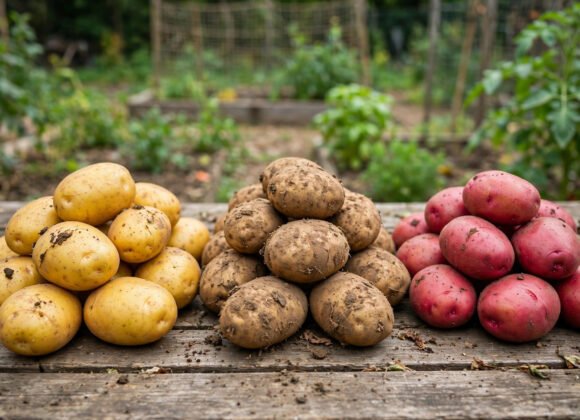
Choose a variety for your zone, season length, and use. Early varieties finish in 60-80 days and suit short seasons. Midseason and late varieties take longer but often store better. Check disease resistance in the variety description, especially scab resistance if your soil pH is high. Buy from a garden centre or seed supplier in late winter or early spring, before popular varieties sell out. Inspect tubers: they should be firm, not soft, shrivelled, or rotten, with no large cuts or green patches.
How many do you need, and how to prepare them?
Small tubers about egg size can be planted whole. Larger tubers can be cut into pieces of about 1.5-2 ounces, each with 1-2 eyes, using a clean knife. Cut 1-3 days before planting and let cut surfaces dry and callus in a cool, ventilated spot. This callus helps prevent rot in cold, wet soil.
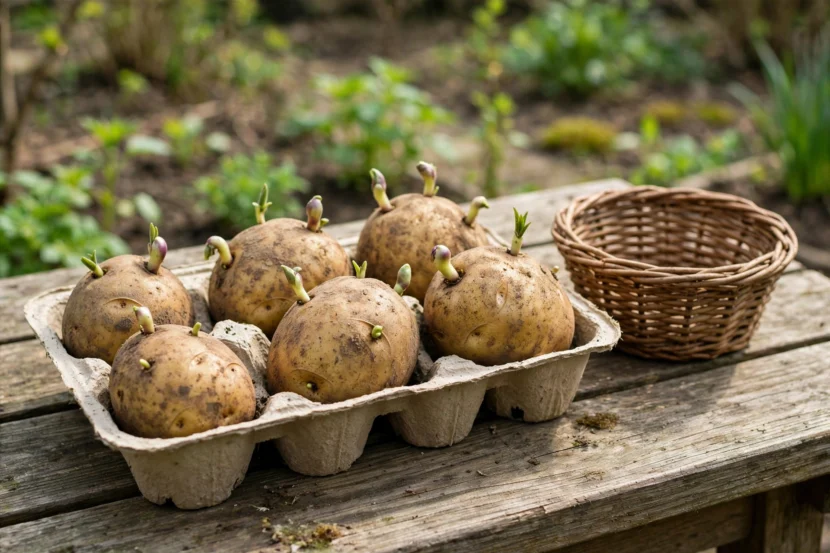
You can also chit seed potatoes before planting: place them eyes up in a cool, bright spot for 2-4 weeks so short, sturdy sprouts form. Chitting is optional, but it can give plants a head start, especially in short seasons. Full guides: How to Cut Seed Potatoes and What Is Chitting Potatoes. Once your seed is cut and chitted, follow the planting steps in our guide to how to plant potatoes.
As a rough guide, Extension planting guides use about 8-10 pounds of seed potatoes per 100 feet of row at normal spacing. For a small bed, count planting spots at 12-inch spacing and allow one piece per spot, plus a few spares.
Can you save your own seed potatoes?
You can save tubers from your healthiest plants for next year, but the risk rises each year because viruses build up in saved stock and are invisible at first. Many experienced gardeners buy fresh certified seed every year or every second year, and only save seed from plants that were vigorous and disease-free all season. Never save tubers from plants that showed blight, virus symptoms, or heavy pest damage, and never save soft, rotten, or heavily green tubers.
FAQ
What are seed potatoes?
Tubers grown for planting, not for eating. Each eye can grow into a new potato plant.
Can you plant potatoes from the grocery store?
It is not recommended. Store potatoes may carry disease and are often treated to prevent sprouting, so results are unreliable.
Are seed potatoes different from regular potatoes?
Yes, in purpose and handling. Seed potatoes are inspected, disease-tested stock grown for planting. Eating potatoes are grown for the table and may be treated to stop sprouting.
Do you need to cut seed potatoes?
Only larger ones. Small egg-size tubers can be planted whole. Larger tubers are cut to 1.5-2 ounce pieces with 1-2 eyes each, then cured before planting.
How long do seed potatoes last before planting?
Store them cool, dark, and ventilated until a few weeks before planting, then chit if you wish. Discard soft, shrivelled, or rotten tubers.