Purple potatoes are not harder to grow than white or yellow potatoes. They need the same loose, well-drained soil, the same full sun and the same watering and hilling as any other potato. The difference is in the color. Their skin and flesh are purple because of natural pigments called anthocyanins, the same kind of pigment that colors blueberries and red cabbage. This guide covers the best purple varieties for home gardens, how to plant them and when to dig them up.
Table of Contents
What makes purple potatoes purple
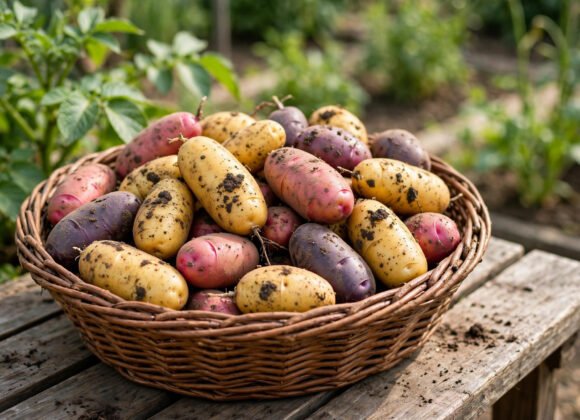
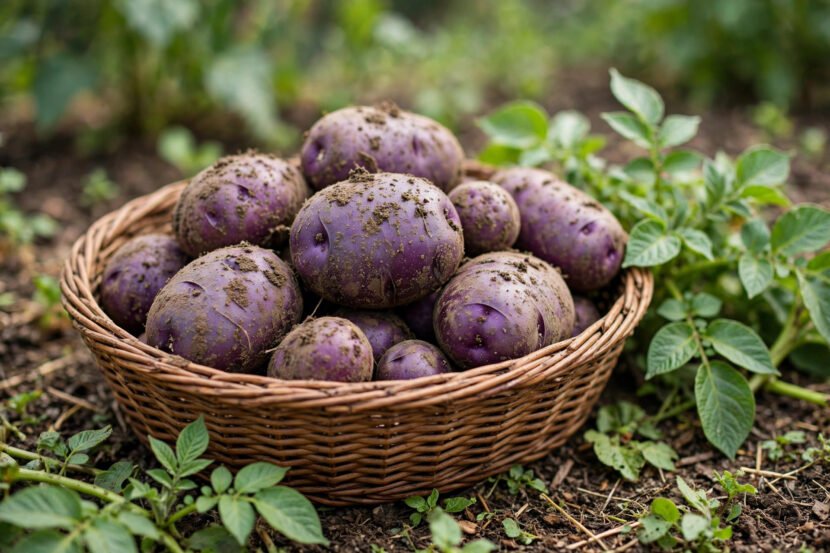
The purple color comes from anthocyanins in the skin and flesh. Some varieties are purple all the way through, while others have purple skin with white or yellow flesh. The color stays bright when steamed or roasted, and fades a little when boiled in a lot of water. Purple potatoes are natural varieties, not dyed or genetically modified. They have been grown for a long time, and some, like Purple Peruvian, come from traditional potato-growing regions in South America. Purple potatoes also contain antioxidants, the same general class of compounds found in other deeply colored vegetables.
Purple potatoes taste much like other potatoes. Most gardeners describe them as earthy and slightly nutty, with a firm texture that holds up well when roasted or steamed. They are a little denser than a fluffy baking potato, so they work best in dishes where you want the pieces to keep their shape.
Do purple potatoes taste different? Yes, a little. Are purple potatoes different from white potatoes? In color and texture, yes. The flesh is firmer and a little denser, so it holds its shape in roasting and salads. If you want purple potato growing tips, treat them like any other potato, and give them loose soil, steady water and regular hilling.
Purple potato varieties for home gardens
The variety you pick matters more than anything else. Seed suppliers sell several purple types, and they differ in size, skin, flesh and maturity.
| Variety | Skin | Flesh | Maturity | Notes |
|---|---|---|---|---|
| Purple Majesty | Dark purple | Deep purple | Midseason | The most common purple variety in the US. |
| All Blue | Blue-purple | Blue-purple | Midseason to late | An older variety, good for roasting. |
| Purple Peruvian | Dark purple | Deep purple | Late | Fingerling shape, small and firm. |
| Purple Viking | Purple with white patches | White with purple streaks | Midseason | Purple skin, white flesh. |
Which purple variety is best? For most beginners, Purple Majesty, because seed is easy to find and the tubers are large and even. If you want to know how to grow Purple Majesty potatoes, start with certified seed and follow the same steps as for any other variety. Purple Peruvian is the best choice if you like fingerlings and do not mind a longer season. All Blue is a good pick if you want the deepest color for roasting. If you are unsure, start with Purple Majesty.
Buy certified seed potatoes from a garden centre or seed supplier. Certified seed is grown to reduce disease, while grocery store potatoes may carry disease. Our guide to seed potatoes explained covers how to choose good seed.
How to grow purple potatoes
Growing purple potatoes follows the same planting steps as other potatoes. Start with the full method in our guide on how to plant potatoes, then use the notes below for the details that matter for purple varieties.
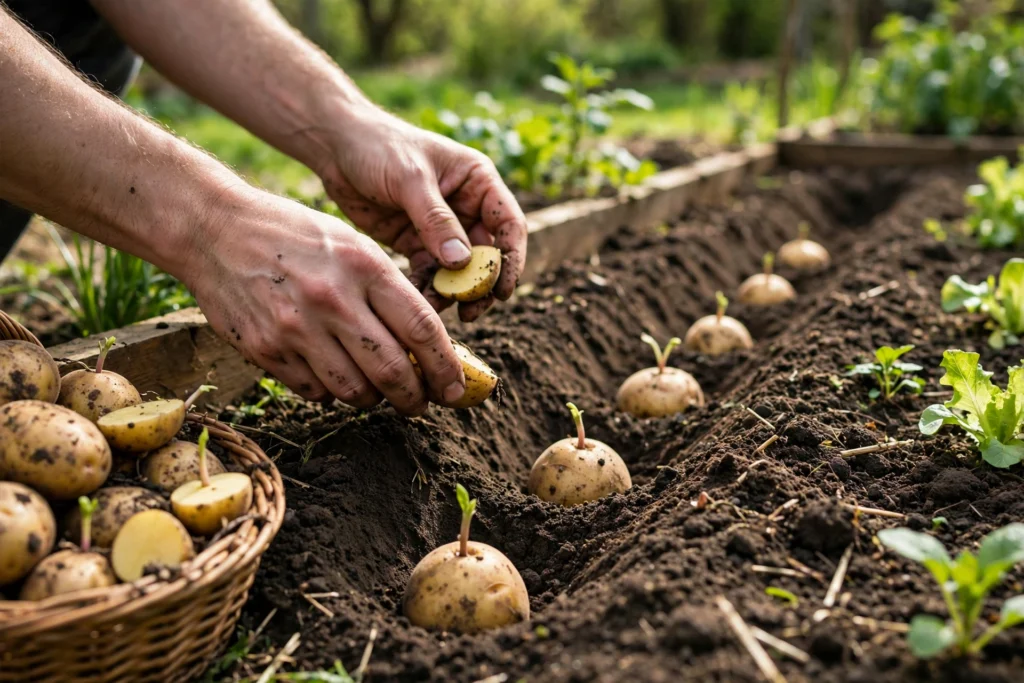
- Pick a sunny spot. Choose a bed with at least 6 hours of direct sun and loose, well-drained soil.
- Time it by soil temperature, not the calendar. Plant when the soil 4 to 6 inches deep is consistently 45 to 50 degrees Fahrenheit and workable.
- Plant seed pieces eyes up. Small tubers about the size of an egg can be planted whole. Cut larger tubers so each piece weighs about 1.5 to 2 ounces and has 1 to 2 eyes. Plant pieces 4 to 6 inches deep and 10 to 12 inches apart in rows 30 to 36 inches apart. The exact depth and spacing chart is in our guide on how deep to plant potatoes.
- Hill as plants grow. When plants are 6 to 8 inches tall, pull loose soil up around the stems, leaving just the top leaves showing. Repeat every few weeks. Hilling gives tubers room to form and keeps them covered so sunlight cannot turn them green.
- Water steadily. Give about 1 to 2 inches of water per week, especially when plants flower, because that is when tubers are forming. Mulch helps hold moisture.
Purple potatoes do not need special soil. They prefer slightly acidic soil, around pH 5.8 to 6.5, like other potatoes. A soil test through your Extension lab is the best way to know what your soil needs. Work compost into the top few inches, but avoid fresh, uncomposted manure right at planting. Do not plant potatoes where tomatoes, peppers or eggplants grew last year. They are all nightshades and share diseases, so rotate to a different bed each year.
Do purple potatoes need more care than other potatoes
Are purple potatoes harder to grow? No. They need the same care as other potatoes. Colorado potato beetles, aphids, early blight and late blight are the most common problems in home gardens. Start with certified seed, good airflow, watering at the base rather than overhead, and crop rotation.
One thing to watch is that purple skin can hide greening. A green tint is easy to see on a white potato, but harder to spot on a dark purple tuber. Keep tubers covered with soil all season, and check each tuber in good light at harvest.
Purple varieties also tend to have thinner skins than a thick-skinned russet, so handle them gently at harvest. A nicked skin lets rot in during storage.
When to harvest purple potatoes
Harvest timing works the same way as for other potatoes. New potatoes can be dug gently 2 to 3 weeks after flowering, about 7 to 8 weeks after planting. For mature storage potatoes, wait until vines yellow and die back, then test one hill. Dig on a dry day, let the tubers dry and brush off loose soil, and cure them before storage. Our guide on how to harvest potatoes without damaging them will cover the full method, and the containers guide shows the same ideas in pots and grow bags: how to grow potatoes in containers.
Purple potatoes store like other potatoes. Keep them in a cool, dark, ventilated place, and check them every few weeks for soft spots or sprouting. Do not wash them before storage. Brush off loose soil instead.
Quick reference table
| Question | Answer |
|---|---|
| Harder to grow? | No, same needs as other potatoes |
| Sun | 6 or more hours of direct sun |
| Soil | Loose, well-drained, pH about 5.8 to 6.5 |
| Planting depth | 4 to 6 inches |
| Spacing | 10 to 12 inches apart, rows 30 to 36 inches apart |
| Soil temperature | 45 to 50 degrees Fahrenheit at planting |
| Best beginner variety | Purple Majesty |
| Best fingerling | Purple Peruvian |
FAQ
Are purple potatoes natural?
Yes. Purple potatoes are natural varieties that have been grown for a long time. Their color comes from anthocyanins, natural pigments also found in blueberries and red cabbage.
Do purple potatoes taste different?
A little. Most people find them earthy and slightly nutty, with a firm texture. They hold their shape well when roasted or steamed.
Are purple potatoes harder to grow?
No. They need the same soil, sun, water and hilling as other potatoes.
Do they store like other potatoes?
Yes. Cure them after harvest, then store them in a cool, dark, ventilated place. Check them every few weeks and use any that are soft or sprouting first.
Can kids grow them?
Yes. Purple potatoes are easy and fun for children to grow. Teach them the safety rules: do not eat green potatoes, and never eat the small green potato berries on the plant.
Sources and further reading
- University of Minnesota Extension, Growing potatoes in home gardens
- Utah State University Extension, How to Grow Potatoes in Your Garden
- Kansas State University Extension, Growing Potatoes
- North Dakota State University Extension, Dakota Gardener: How to plant potatoes