Are green potatoes safe to eat? It depends on how green the potato is. A potato with a small green patch can be made safe by peeling deeply, past the green color. A potato that is heavily green, green all the way through, bitter tasting or sprouting badly should be thrown away. Cooking does not remove the problem. If you are unsure, discard it.
Table of Contents
Why do potatoes turn green?
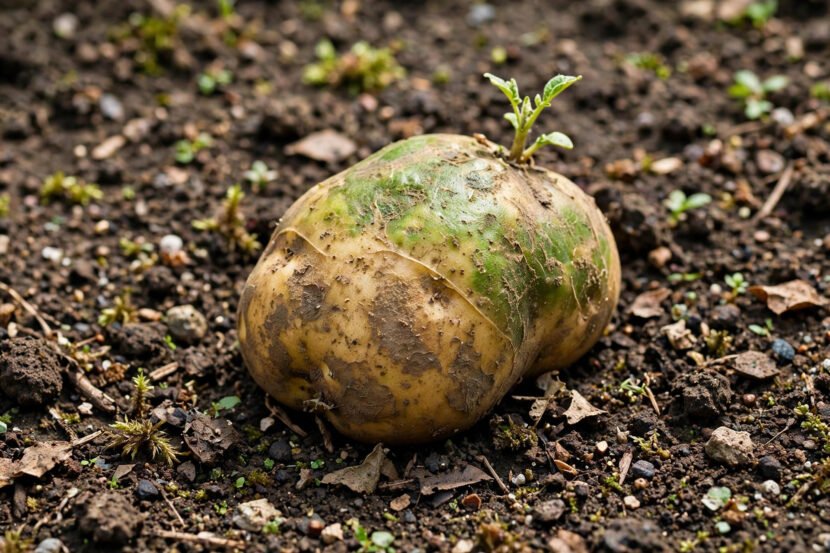
What causes potatoes to turn green is light exposure. Potatoes turn green when they are exposed to light. Light triggers the tuber to make chlorophyll, the same green pigment in leaves. Chlorophyll itself is harmless, but it forms at the same time and in the same place as solanine, a natural toxin the plant makes to protect itself. So the green color is a warning sign that solanine levels there have risen. That warning sign is why so many gardeners ask: are green potatoes safe to eat?
Greening can happen in the garden and in storage. In the garden, tubers near the surface get sunlight when soil washes away or when hilling is skipped. In storage, potatoes left on a counter, in a clear bag or near a window turn green in a few days. Even the light in a kitchen is enough over time. That is why the standard advice from University Extension services is to store potatoes in the dark.
What is solanine?
Solanine is a natural glycoalkaloid that potatoes and other nightshade plants make. It is concentrated in the skin, in green areas, in sprouts and in the small green fruit or berries on potato plants. The flesh of a normal, ungreened potato has very little of it. The green potato skin is where solanine is most concentrated. Solanine tastes bitter, and eating enough of it can cause stomach upset, including nausea, cramps and diarrhoea. This is general information, not medical advice. If someone eats a heavily green potato and feels ill, they should seek medical advice. Knowing what solanine is helps you answer the question: are green potatoes safe to eat?
Solanine is not destroyed by normal cooking. Boiling, baking, roasting and frying do not remove it in any meaningful way, because it is heat stable at kitchen temperatures. Peeling helps only if the green area is shallow and you remove all of it, plus a good margin below it. A potato that is green through the flesh cannot be fixed by peeling or cooking.
Are green potatoes safe to eat if only a little green?
Are green potatoes safe to eat when only slightly green? Yes, but only in one case. A small green patch on one side of an otherwise firm, normal potato is the only case where peeling is a reasonable answer. Can you eat green potatoes? Only when the green is a small patch that you peel away deeply. A heavily green potato should not be eaten at all. Cut away the green skin and the flesh underneath it until no green color is left, then cut a little deeper still. If the green goes deep into the flesh, or if the potato is green over most of its surface, do not try to save it. Throw it away.
Use these checks before you decide. They are the quickest way to answer the question are green potatoes safe to eat for the potato in your hand. A small green patch on a firm potato is the only case where peeling is a reasonable answer.
- Look. Is the green a small patch or most of the potato? Small patch only.
- Feel. Is the potato firm? Soft or shriveled potatoes should be discarded anyway.
- Taste. If a cooked potato tastes bitter, stop eating it. Bitterness is a sign of high solanine.
- Sprouts. Long sprouts on their own are not the same as greening, but a potato that is both heavily sprouted and green should be discarded.
Children are smaller and more sensitive, so be stricter with potatoes served to children. For a child, the answer to are green potatoes safe to eat is a firm no. Do not serve green potatoes to children at all. If a potato is green enough that you have to think about it, it is not worth serving to a child.
Are green potatoes safe to eat after peeling?
Yes, but only in the narrow case above. Peel deeply, well past the green, and cut away all green flesh. If you find green running through the inside of the potato when you cut it open, stop and throw it away. Do not feed peeled green potatoes to pets or livestock either. The same toxin affects animals.
You may wonder are green potatoes safe to eat if you fry them into chips. Do not try to save heavily green potatoes by making chips, fries or soup. Cutting them small, frying them or boiling them in soup does not make them safe. Discard is the only safe answer for a heavily green potato.
How to stop potatoes turning green
Prevention is easy and it starts in the garden. Hilling is the main job. When plants are 6 to 8 inches tall, pull loose soil up around the stems, leaving just the top leaves showing. Repeat every few weeks. Hilling keeps developing tubers covered so sunlight cannot reach them. Our guide on how to plant potatoes explains hilling in the full planting method. Timing matters too. For the right planting window by zone, see when to plant potatoes in the USA.
At harvest, dig on a dry day and keep tubers out of the sun. Move them into shade right away, let them dry, brush off loose soil and cure them before storage. For the full method, see our guide on how to harvest potatoes without damaging them.
In storage, keep potatoes in a cool, dark, ventilated place. A paper bag, a cardboard box or a dark cupboard all work. Do not store them in a clear plastic bag on a counter, and do not store them next to onions, which speed sprouting. Check stored potatoes every few weeks and remove any that are soft, sprouting heavily or turning green. Good storage means you will rarely have to ask: are green potatoes safe to eat?
Why are potato berries dangerous?
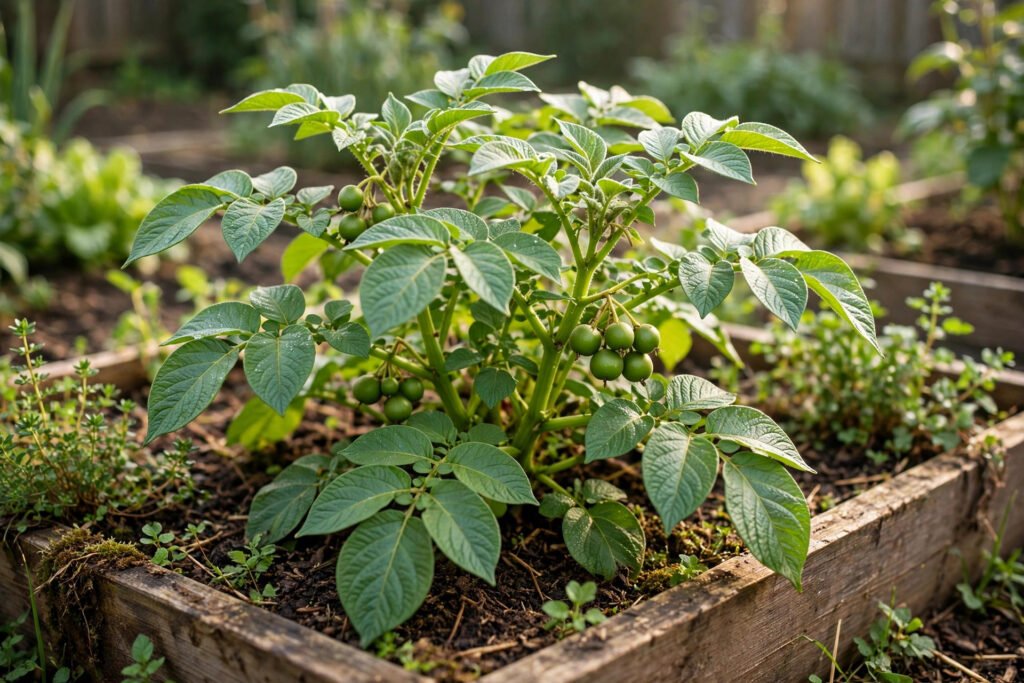
After flowering, potato plants sometimes grow small green fruit that look like tiny green tomatoes. These are potato berries, and they are toxic. They contain high levels of solanine and other glycoalkaloids, and they should never be eaten. If children are in the garden, teach them that potato berries are not tomatoes and must not be eaten. Pick them off and throw them away if children or pets can reach them. The tubers underground are the food. The berries are not.
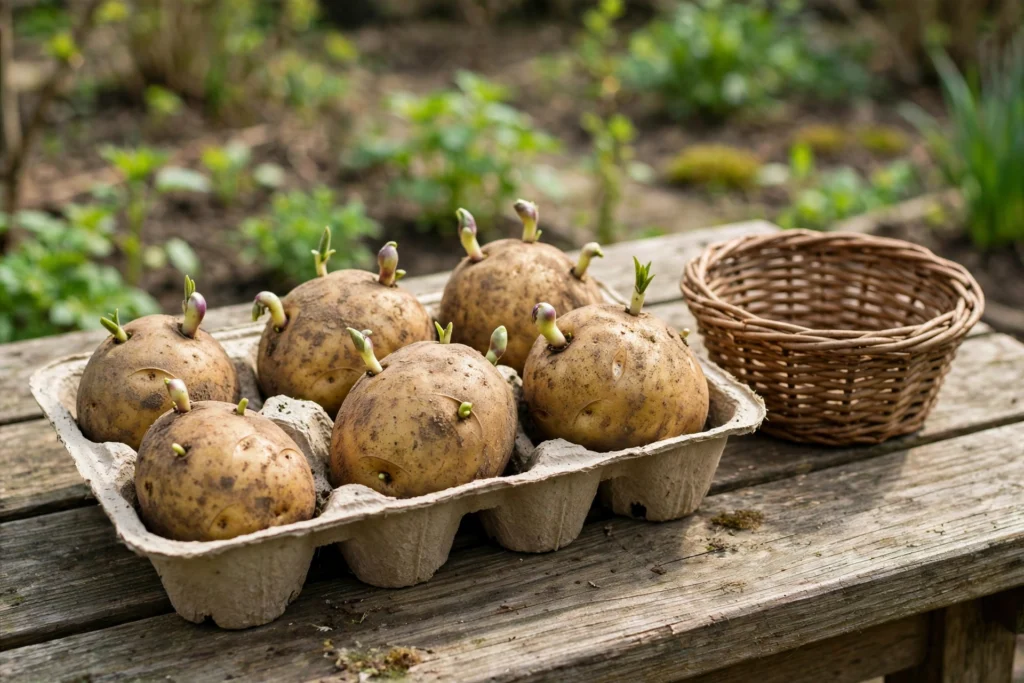
The same warning applies to sprouts. Potato sprouts contain solanine too. Sprouts grow from the eyes on the tuber, as explained in our guide to seed potatoes. Break off small sprouts before cooking a firm, ungreened potato. If a potato has long, thick sprouts and feels soft or shriveled, it should be composted or discarded rather than eaten. If the potato is also green, the answer to are green potatoes safe to eat is no.
Quick reference table
| Situation | What to do |
|---|---|
| Small green patch, firm potato | Peel deeply past all green, then cook normally |
| Green over most of the surface | Discard |
| Green through the flesh | Discard |
| Bitter taste when cooked | Stop eating, discard the rest |
| Small green fruit (berries) on the plant | Do not eat, pick off and discard |
| Long sprouts plus green skin | Discard |
| Firm potato, small sprouts, no green | Break off sprouts, peel and cook |
FAQ
Is solanine poisonous?
Solanine is a natural toxin that potatoes make to protect themselves. Eating enough of it can cause stomach upset such as nausea, cramps and diarrhea. Normal potatoes have very little of it.
Can cooking remove solanine?
No. Boiling, baking, roasting and frying do not remove solanine in any meaningful way. Peeling deeply can remove a shallow green patch, but it cannot fix a heavily green potato, and cooking a green potato does not make it safe. So cooking does not change the answer to are green potatoes safe to eat.
Should children eat green potatoes?
No. Are green potatoes safe to eat for children? They are not — do not serve green potatoes to children. Children are smaller and more sensitive, so be stricter with them than with adults. If a potato is green enough to make you pause, do not serve it to a child.
Is a little green okay?
Are green potatoes safe to eat in this case? A small green patch on a firm potato can be handled by peeling deeply, well past all green color. If the green is deep, widespread or the potato tastes bitter, discard it. When in doubt, throw it out.
Why are potato berries dangerous?
Potato berries are the small green fruit that sometimes grow on potato plants after flowering. They contain high levels of solanine and other glycoalkaloids and should never be eaten. They look like tiny green tomatoes, but they are not food. The safety question are green potatoes safe to eat covers tubers, not berries: berries are never food.
Sources and further reading
- University of Minnesota Extension, Growing potatoes in home gardens
- Utah State University Extension, How to Grow Potatoes in Your Garden
- Kansas State University Extension, Growing Potatoes
- North Dakota State University Extension, Dakota Gardener: How to plant potatoes