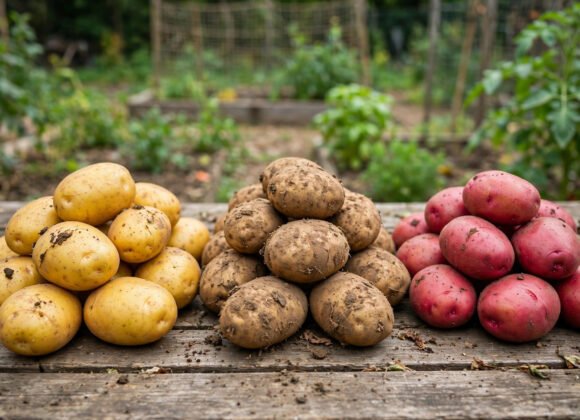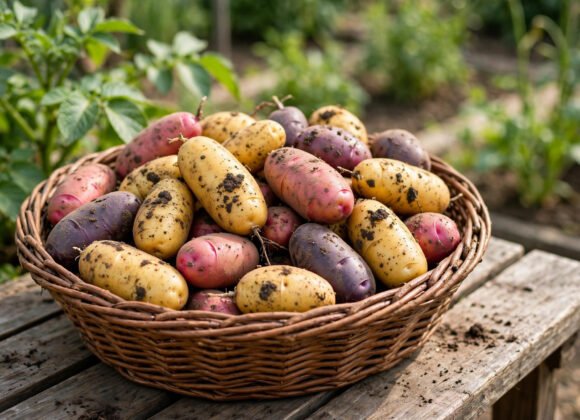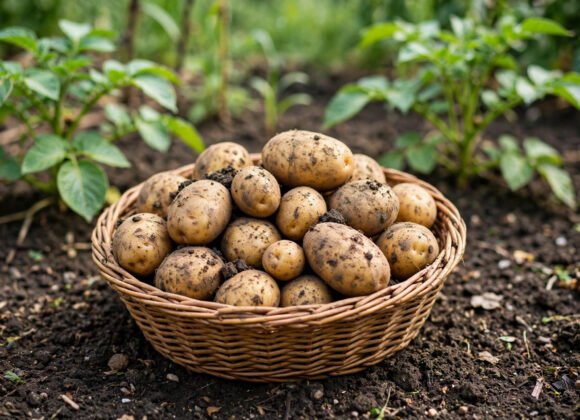

When to harvest potatoes is the question every potato grower asks near the end of the season, and the honest answer is that it depends on what kind of potato you want to eat. New potatoes are small, thin-skinned and ready early, while mature potatoes need more time in the ground so their skins can toughen up for storage. Both come from the same plants, and the only difference is when you dig them. This guide shows you the signs to watch for and the simple skin-set test that tells you the tubers are ready.
Table of Contents
New potatoes vs mature potatoes: the short answer
When to harvest potatoes comes down to a simple choice between digging early for new potatoes or waiting for mature potatoes. New potatoes are young tubers with thin skins, and you dig them about two to three weeks after the plants finish flowering. Mature potatoes stay in the ground until the vines yellow and die back, and then you wait a week or two more so the skins can set.
The table later in this guide puts the two side by side, so you can see the trade-off at a glance. If you want potatoes for dinner tonight, dig new ones. If you want potatoes that will keep in storage for months, wait for the vines to die back.
How do you know when potatoes are ready?
When to harvest potatoes is easier to judge when you know the four signs to look for, and no single sign tells the whole story on its own. Flowering comes first, and it tells you that the plants have started forming tubers underground. Yellowing vines come next, and they tell you that the plant is finishing its work and sending its energy down into the tubers. Dieback follows, and when the vines have collapsed and turned brown, the potatoes below are as big as they are going to get.
The last sign is the skin-set test, and it is the one that matters most, because it tells you whether the skins are tough enough for the potatoes to keep.
When to harvest new potatoes
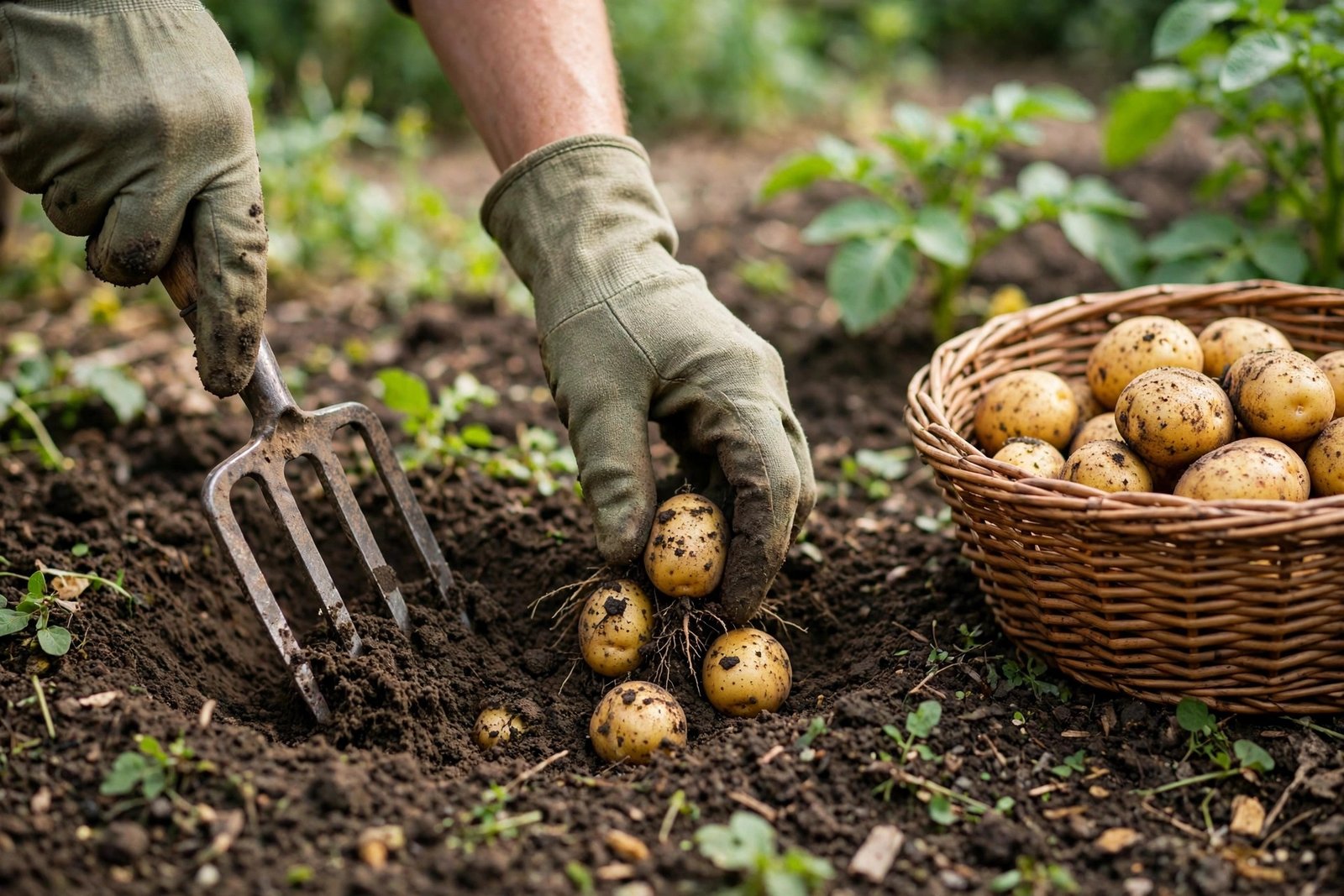
New potatoes are ready about two to three weeks after the plants finish flowering, which is usually about two months after planting for early varieties. The tubers are small, about the size of a golf ball or an egg, and their skins are so thin that they rub off with your thumb. That thin skin is the point, because you cook new potatoes skin and all. To steal a few early, push the soil gently aside at the edge of a plant and feel for tubers with your fingers, then take only what you need and cover the rest back up. The plant keeps growing after a careful steal, so you can come back for more.
Do not dig the whole row this early, because the rest of the tubers are still growing. If you are wondering when to harvest potatoes for the table tonight, new potatoes are the answer. Our guide on how to harvest potatoes shows the gentle digging method that works for new potatoes too.
When to harvest mature potatoes
Mature potatoes are ready when the vines have yellowed and died back, and the skins have had time to set. Dieback is the clearest sign, because the plant stops sending energy to the tubers once the tops collapse, and the potatoes stop growing. Wait another one to two weeks after the vines die back before you dig, because that waiting time lets the skins thicken and toughen, which protects the tuber in storage. Stop watering once the vines start to yellow, because wet soil at this stage slows the skin from setting and raises the risk of rot.
Our guide on how often to water potatoes explains why you cut back on water as the vines yellow. When to harvest potatoes for storage is a different decision from digging a few new potatoes for dinner, and the vines tell you when the time has come. If the vines are still green and growing strongly, the potatoes are still bulking up, so leave them alone and check again in a week.
The skin-set test
The skin-set test is the most reliable way to judge when to harvest potatoes, and it takes about ten seconds. Dig one test plant, pick up a tuber, and rub the skin firmly with your thumb. If the skin rubs off easily, the potato is not ready, and you should put the plant back, cover the tubers with soil, and wait another week. If the skin stays put and feels firm under your thumb, the skins have set, and the rest of the row is ready to dig.
Test two or three plants across the row, because one plant can be ahead of the others, and a single test can mislead you. Extension guides recommend the test over counting days alone, because days to maturity vary with weather and variety, so the calendar is only a rough guide, while the skin on the tuber tells you the truth.
What happens if you leave potatoes in the ground too long
Leaving potatoes in the ground too long causes more problems than digging them a week early, and wet weather makes it worse. Tubers left in wet soil can rot, and a heavy rain after dieback can turn a good crop into mush in a matter of days. Voles, wireworms and slugs also feed on tubers left in the ground, and the longer the potatoes sit there, the more damage they do. Potatoes can also sprout again if the soil stays warm and damp, and second growth makes the tubers misshapen and hard to store.
A short wait is fine, and in dry soil you can leave mature potatoes in the ground for two or three weeks after dieback without much risk. If you are unsure when to harvest potatoes in a wet autumn, dig sooner rather than later, because a week in wet soil does more harm than a week less of growing.
New potatoes vs mature potatoes at a glance
Use this table to judge when to harvest potatoes for the crop you want.
| New potatoes | Mature potatoes | |
|---|---|---|
| When to dig | 2 to 3 weeks after flowering | 1 to 2 weeks after vines die back |
| Size | Small, golf-ball to egg size | Full size for the variety |
| Skin | Thin, rubs off easily | Thick and firm, set |
| Best use | Cook and eat within days | Store for months |
| Storage | A few days in the fridge | Months in a cool dark place |
What to do right after you dig
When to harvest potatoes is only half the job, because what you do in the first hours after digging decides how long the crop keeps. Dig on a dry day, and let the tubers sit on the soil surface for a few hours so the skins can dry. Brush the loose soil off with your hands, and do not wash the potatoes before storage, because water on the skins invites rot. Eat any tubers you nicked with the fork first, because a cut skin is an open door for rot.
Move the rest into a dark, cool place to cure for ten to fourteen days, so the skins can toughen further before long storage. Our guide on how to plant potatoes covers the full season from planting to harvest, and the curing guide coming next will walk through the curing step in full.
FAQ
Should I wait for vines to die?
Yes, wait for the vines to die back before you dig the main crop, because dieback means the tubers have stopped growing and the skins are ready to set. If you dig while the vines are still green, the skins will be thin, and the potatoes will bruise easily and store badly. The one exception is new potatoes, which you dig while the vines are still green, two to three weeks after flowering. When to harvest potatoes for storage, the vines are your calendar: green vines mean wait, dead vines mean dig.
Can I steal new potatoes early?
Yes, you can steal new potatoes early, and it does not harm the plant if you are gentle. Push the soil aside at the edge of the plant, feel for tubers with your fingers, and take only the ones you need. Cover the rest back up with soil, and the plant will keep growing. Do not pull the whole plant up, because that ends its season. Stealing a few early tubers is the easiest way to learn when to harvest potatoes in your own garden, because you can see and feel the size for yourself.
Does flowering mean ready?
No, flowering does not mean the potatoes are ready, but it does mean they are on their way. Flowering tells you that tubers are forming underground, and new potatoes follow about two to three weeks later. Mature potatoes need much longer, and they are ready only after the vines yellow and die back. Think of flowering as the starting gun, not the finish line. If you judge when to harvest potatoes by flowering alone, you will dig too early, so wait for the vines and the skin-set test as well.
What if it rains after the vines die back?
Dig as soon as the soil dries enough to work, because tubers left in wet soil can rot quickly after dieback. Do not dig in the rain or in mud, because wet tubers are hard to dry and easy to bruise. If the rain lasts for days, dig anyway once the soil is workable, and dry the tubers in a shed or garage with good airflow. Rain changes when to harvest potatoes, and a wet week after dieback is a reason to dig sooner rather than later.
How long after planting can I harvest?
It depends on the variety, and the range is wide. Early varieties give you new potatoes about two months after planting, and mature potatoes after 60 to 80 days. Midseason varieties take 80 to 100 days, and late varieties take 110 days or more. The seed packet and our guide on early, midseason and late potatoes give you a rough date, but the vines and the skin-set test give you the real answer. When to harvest potatoes is set by the variety you planted, so keep the seed packet or the label as your starting point.
Sources and further reading
- University of Minnesota Extension, Growing potatoes in home gardens
- Utah State University Extension, How to Grow Potatoes in Your Garden
- Kansas State University Extension, Growing Potatoes
- North Dakota State University Extension, Dakota Gardener: How to plant potatoes