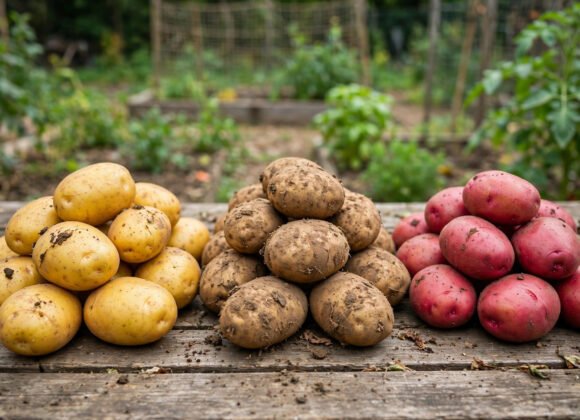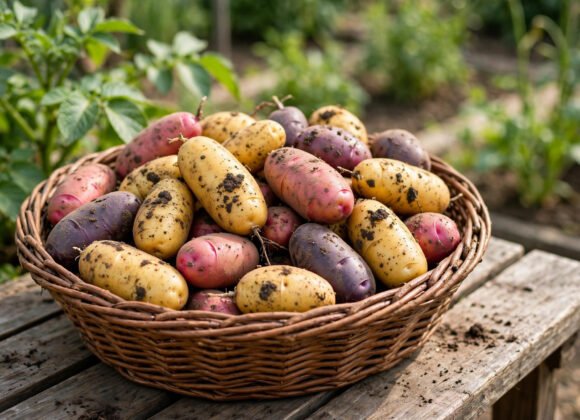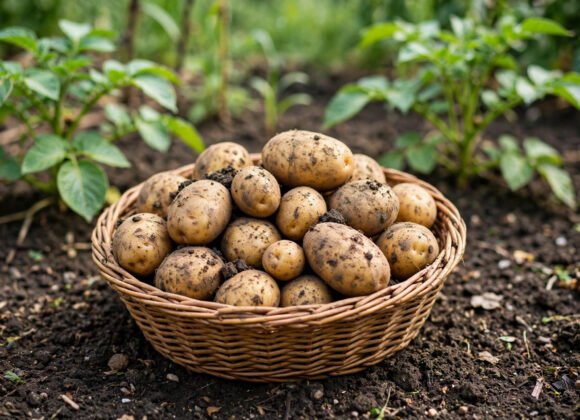
How to harvest potatoes without damaging them comes down to a few simple habits, but harvest time is also the moment when most tubers get damaged. A fork driven into the middle of a hill will spear potatoes. Wet soil will stick to skins and invite rot. Washing tubers before storage adds moisture they do not need. The fix is a small set of habits: wait for the right signs, dig on a dry day, start at the edge of the hill with a fork, lift gently and cure before you store.
Table of Contents
How to tell potatoes are ready
Knowing how to harvest potatoes starts with knowing when to dig. Potatoes are ready in two stages. New potatoes are small, tender tubers dug early. Storage potatoes are mature tubers dug after the vines die back. Both come from the same plants, just at different times.
| Stage | When | Signs | Best use |
|---|---|---|---|
| New potatoes | 2 to 3 weeks after flowering, about 7 to 8 weeks after planting | Plants still green and flowering or just finished; tubers small with thin, papery skins that rub off easily | Eat within a few days, boiled or roasted whole |
| Mature storage potatoes | After vines yellow and die back | Foliage yellow or brown and dry; skins thick and firmly attached, not rubbing off easily | Cure and store for weeks or months |
Do not rely on the calendar alone. Early varieties take about 60 to 80 days, midseason about 80 to 100 days, and late varieties 110 days or more. When the vines start to yellow, dig a test hill. If the skins are thick and firmly attached, the crop is ready. If the skins rub off easily, wait a few more days and test again.
One useful step when you are learning how to harvest potatoes for storage is to cut the vines back about two weeks before you plan to dig mature potatoes. This lets the skins set and thicken, which helps them store longer. It also makes digging easier because you can see the hills clearly. Do not cut vines while they are still green and growing if you want new potatoes.
The best tool to dig potatoes
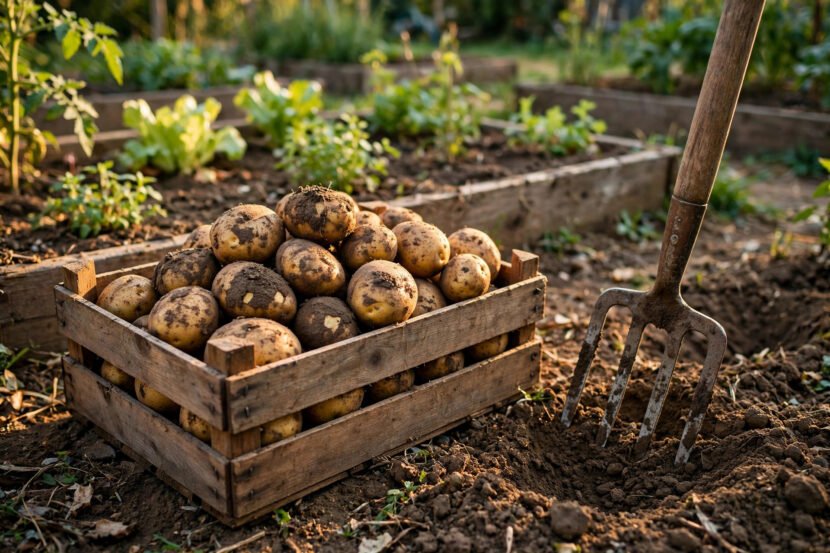
A digging fork is the best tool when you are learning how to harvest potatoes. Its flat tines slide under a hill and lift the soil, while a shovel is more likely to slice tubers in half. A hand fork works for containers and small beds.
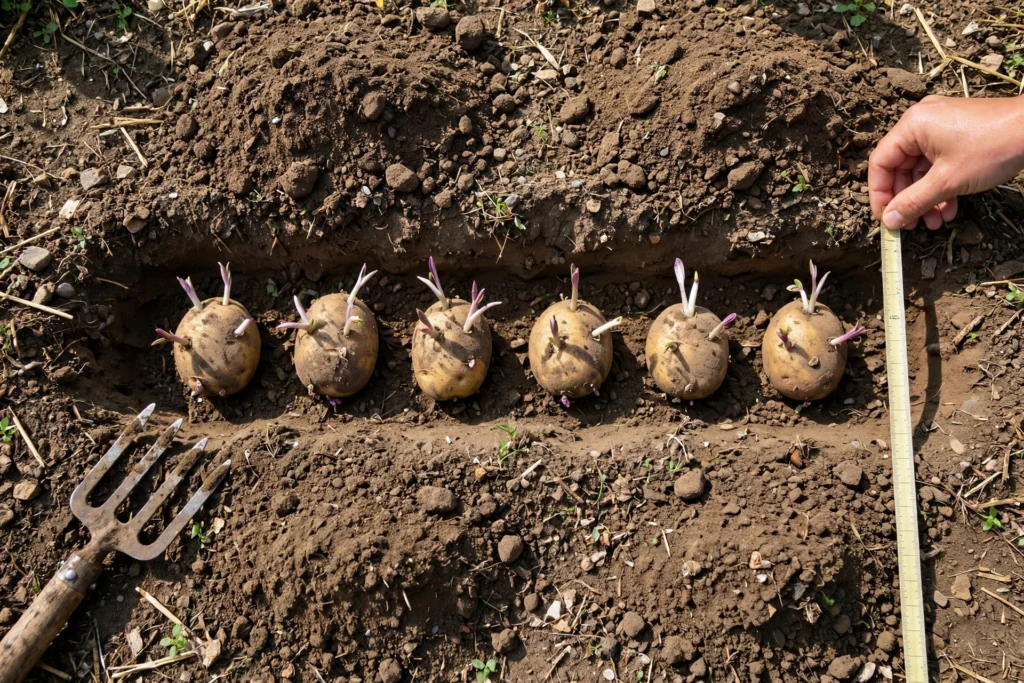
What matters is how you use it. Always start at the edge of the hill, well away from the centre where the tubers sit. Push the fork in at an angle, lift the soil gently and then feel through it with your hands. Gloves protect your hands and keep you from nicking skins.
Keep a bucket nearby, plus a second container for damaged tubers, so you can use them first. A tarp beside the bed helps you spot tubers easily and keep them off wet ground.
How to harvest potatoes from a garden bed
Follow the same steps for how to harvest potatoes in rows and in raised beds. The method is the same, only the space is smaller.
- Pick a dry day. Dig when the soil is dry, not wet. Wet soil sticks to tubers, and wet tubers rot in storage. If rain is forecast, wait.
- Cut the vines back if the crop is mature. Remove the dead foliage so you can see the hills.
- Start at the edge. Push the fork in about 12 inches out from the centre of the hill, at an angle, and lift. Work around the hill from several sides.
- Lift and feel. Lift the soil gently and sift through it with gloved hands. Potatoes spread further than most beginners expect, so check around the hill as well as under it.
- Set tubers aside in the shade. Put sound tubers in your basket and move them out of direct sun as you work. Sunlight turns exposed tubers green, and green potatoes contain solanine.
- Sort as you go. Put cut or bruised tubers in a separate pile and eat them within a few days.
Work slowly when you are learning how to harvest potatoes. The most common mistake is rushing and spearing tubers with the fork. If you do cut a potato, do not throw it away. Cut tubers are fine to eat right away. Just use them first, because the cut surface lets rot in during storage.
How to harvest potatoes in pots and grow bags
Harvesting potatoes from containers is the easiest method of all, because you do not need a fork at all. That is one of the reasons containers are popular for small gardens. Here is how to harvest potatoes in pots without a fork: tip the pot gently onto a tarp and break the mix apart with your hands. Our full container method is in the guide on how to grow potatoes in containers, and the harvest steps are simple.
For a hard pot, tip the pot gently onto a tarp and break the mix apart with your hands. For a fabric grow bag, just tip the bag out onto a tarp. The mix falls away and the tubers are easy to find.
You can also learn how to harvest potatoes from a container without emptying it. Reach gently into the mix near the edge of the pot and feel for small tubers, then pull one or two out and leave the plant to keep growing. This works best when the mix is loose.
Can you harvest potatoes in the rain? You can, but it is better to wait for a dry day. Wet soil clings to skins, and moisture in storage causes rot. If rain catches you mid-harvest, finish the row, move the tubers under cover and spread them out to dry before curing.
What to do after digging
Do not wash potatoes after digging. Brush off loose soil and let them dry in a shaded, ventilated spot. Washing adds moisture that invites rot. Only wash potatoes right before cooking.
Once you know how to harvest potatoes, the next step is curing. Curing means holding mature potatoes for about one to two weeks in a dark place with good airflow, so their skins thicken and small nicks heal. New potatoes do not need curing, because they are eaten within days. The timing that leads up to harvest is in our guide on when to plant potatoes and the full planting method in our guide on how to plant potatoes.
After learning how to harvest potatoes, store cured potatoes in a cool, dark, ventilated place, and check them every few weeks.
Quick reference table
| Step | What to do |
|---|---|
| Timing | New: 2 to 3 weeks after flowering. Mature: after vines die back |
| Weather | Dig on a dry day, work in the shade |
| Tool | Digging fork, start 12 inches from the centre of the hill |
| Containers | Tip the pot or grow bag onto a tarp, no fork needed |
| Cut tubers | Eat within a few days, do not store |
| Washing | Do not wash before storage, brush off loose soil only |
| After digging | Dry in shade, cure, then store cool, dark and ventilated |
FAQ
What is the best way to dig potatoes?
To learn how to harvest potatoes without damage, use a digging fork, start at the edge of the hill about 12 inches from the centre, and lift the soil gently. A shovel is more likely to slice tubers, so a fork is the better tool.
Should you wash potatoes after digging?
No. Brush off loose soil and let them dry in the shade. Washing adds moisture that invites rot in storage. Wash potatoes only right before cooking.
Do I need a special fork?
No. A standard four-tine digging fork is the right tool. A hand fork works for containers and small beds.
How do I harvest potatoes from grow bags?
Learning how to harvest potatoes from grow bags is simple: tip the bag out onto a tarp and pick the tubers from the mix by hand. No fork is needed. Grow bags are one of the easiest ways to harvest, because you can empty the whole bag in a minute.
What if I cut a potato while digging?
Eat it within a few days. Cut tubers are fine to eat right away, but the cut surface lets rot in, so they will not store.
Sources and further reading
- University of Minnesota Extension, Growing potatoes in home gardens
- Utah State University Extension, How to Grow Potatoes in Your Garden
- Kansas State University Extension, Growing Potatoes
- North Dakota State University Extension, Dakota Gardener: How to plant potatoes