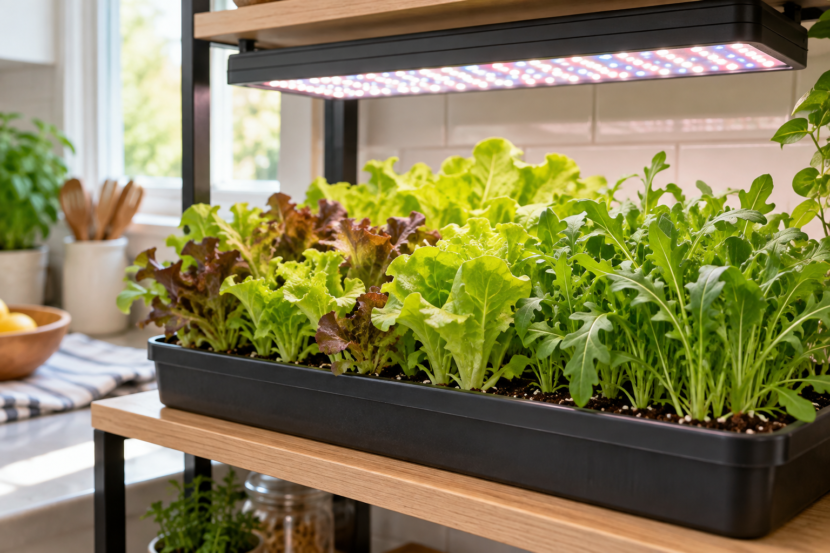
Learning how to grow lettuce is one of the easiest wins in the vegetable garden, because it is fast, forgiving and keeps producing for weeks. Lettuce is a cool season crop that thrives in spring and fall, and a short row sown every two weeks will keep salads coming without a glut. Give it rich soil, steady water and a little shade in warm weather.
Quick Answer
- A cool season crop for spring and fall.
- Sow a short row every 2 weeks.
- Thin seedlings to 6 to 8 inches apart.
- Harvest outer leaves, or cut above the crown so it regrows.
- Use shade or bolt resistant varieties in warm weather.
Step by Step
- Sow little and often. Sow lettuce seeds shallowly in a short row every 2 weeks, rather than a long row all at once. Succession sowing gives a steady supply and avoids bolting before you can eat it all.
- Thin to the right spacing. Once seedlings are a few inches tall, thin them to 6 to 8 inches apart, eating the thinnings as baby leaves. Proper spacing gives each plant room to form a full head or a generous clump of leaves.
- Water gently and mulch. Keep soil evenly moist, because lettuce has shallow roots and dries out quickly. A light mulch holds moisture, keeps roots cool and reduces soil splashing onto leaves.
- Harvest the right way. Pick outer leaves as you need them, letting the centre keep growing, or cut a loose-leaf plant about an inch above the crown so it regrows for a second cut. Always harvest in the cool of the morning for crisp leaves.
- Beat the heat. In warm weather, grow lettuce in partial shade, choose bolt resistant or heat tolerant varieties, and water more often. Once lettuce bolts, it turns bitter, so it is better to sow a fresh row than to struggle with stressed plants.
- Protect from slugs. Check plants in the evening, use barriers or hand pick slugs, and avoid leaving damp debris near the bed. Young lettuce is a favourite slug food, so early protection matters.
Common Mistakes to Avoid
- Sowing too much at once, then watching it bolt before it is eaten.
- Letting soil dry out, which makes leaves bitter and tough.
- Skipping thinning, so plants stay crowded and small.
Related Guides
With regular sowing and steady watering, lettuce is a crop you can rely on for fresh, crisp leaves for most of the year.