How to hill potatoes is one of the simplest skills in the vegetable garden, and it makes a real difference to your harvest. Hilling means pulling loose soil up around the stems of your potato plants as they grow, so the lower stems end up buried in a low ridge. The job takes only a few minutes per row, and you repeat it two or three times during the season. This guide covers when to start, how high to build the hills, and what happens if you skip the job.
Table of Contents
Why do you hill potatoes?
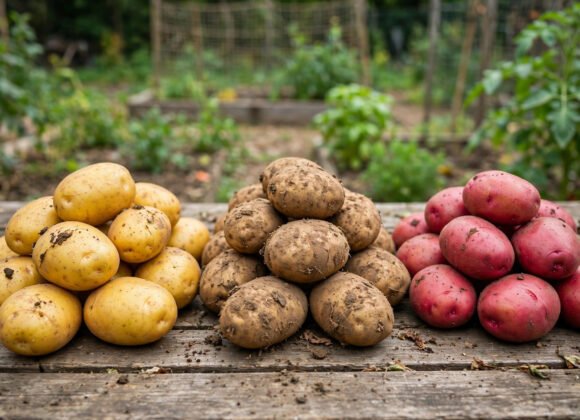
Why do you hill potatoes at all is a fair question, because most vegetables are left alone once they are planted. Potatoes are different, and that is why learning how to hill potatoes is worth a few minutes of your time. New tubers grow on thin stems called stolons, and those stolons grow out from the main stem above the seed piece you planted. If the stems stay exposed to light, the tubers that form near the surface turn green instead of staying pale and edible.
Hilling does three jobs at once. First, it buries more of the stem, which gives the plant room to form more stolons and more tubers. Second, it keeps the developing tubers covered, so sunlight cannot reach them and turn them green. Third, the ridge drains rain away from the stems, which keeps the soil around the tubers loose instead of waterlogged.
Our guide on how to plant potatoes covers the full planting method, including the depth and spacing that leave you room to hill later.
When to hill potatoes for the first time
The first step in learning how to hill potatoes is knowing when to start, and the plants themselves tell you. Begin when the plants are 6 to 8 inches tall, which is usually two or three weeks after the shoots come up. At that size the stems are strong enough to take a mound of soil, and the leaves are high enough to stay above it.
The University of Minnesota Extension suggests starting when the stems reach about a foot tall and then hilling once or twice more, so the exact starting height is flexible. Earlier is safer than later. Do not wait until the plants are flowering, because by then some tubers may already be sitting near the surface.
How to hill potatoes step by step
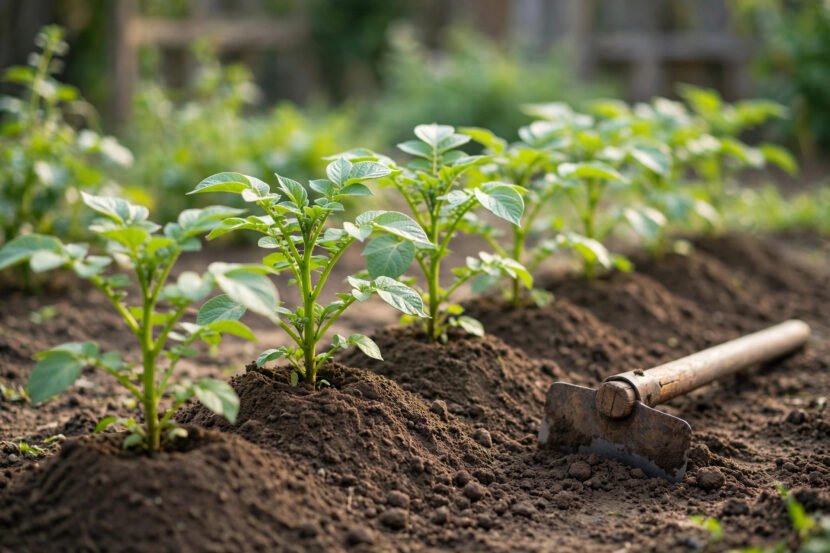
Here is how to hill potatoes in five simple steps. A hoe or a garden fork is all the tool you need, and the job goes best on a dry day, when the soil is moist but crumbly, not wet and heavy.
- Check the height first, because you only hill when the plants have reached 6 to 8 inches.
- Use a hoe to pull loose soil from the path between the rows up against the stems on both sides.
- Build the soil into a low ridge that covers the lower third of each stem, and leave the top leaves fully exposed to the sun.
- Pat the ridge gently with the back of the hoe so it holds its shape, and make sure no tubers are left poking through.
- Water the bed lightly after hilling if the soil is dry, because damp soil settles around the stems and stays in place.
Keep the leaves above the soil line, because buried leaves rot and the plant loses the growth it needs. If a little soil falls on the lowest leaves, brush it off.
How high should hills be?
If you are learning how to hill potatoes, the height rule is simple. Add 3 to 4 inches of soil at each hilling, and finish the season with a ridge about 6 to 8 inches high in total. That matches the University of Minnesota Extension guidance of 6 to 8 inches of soil in total by the end of the season.
Never bury the whole plant in one go, because a plant covered up to its top leaves cannot photosynthesise, and it will struggle to regrow. Build the height in stages instead, and the plant keeps growing through the soil you add.
How often to hill potatoes
Most guides on how to hill potatoes suggest two or three rounds in a season, and the timing follows the growth of the plants. The first hilling happens when the plants are 6 to 8 inches tall. The second comes two or three weeks later, when the plants have grown another 6 inches or so. A third hilling follows in the same way, usually before the plants flower.
Stop hilling once the plants flower, because the tubers are already forming and the stems are tall enough to shade the soil themselves. After flowering, your job changes from hilling to watering, and our guide on how often to water potatoes explains the weekly-inch rule for the bulking stage.
Hilling potatoes with straw vs soil
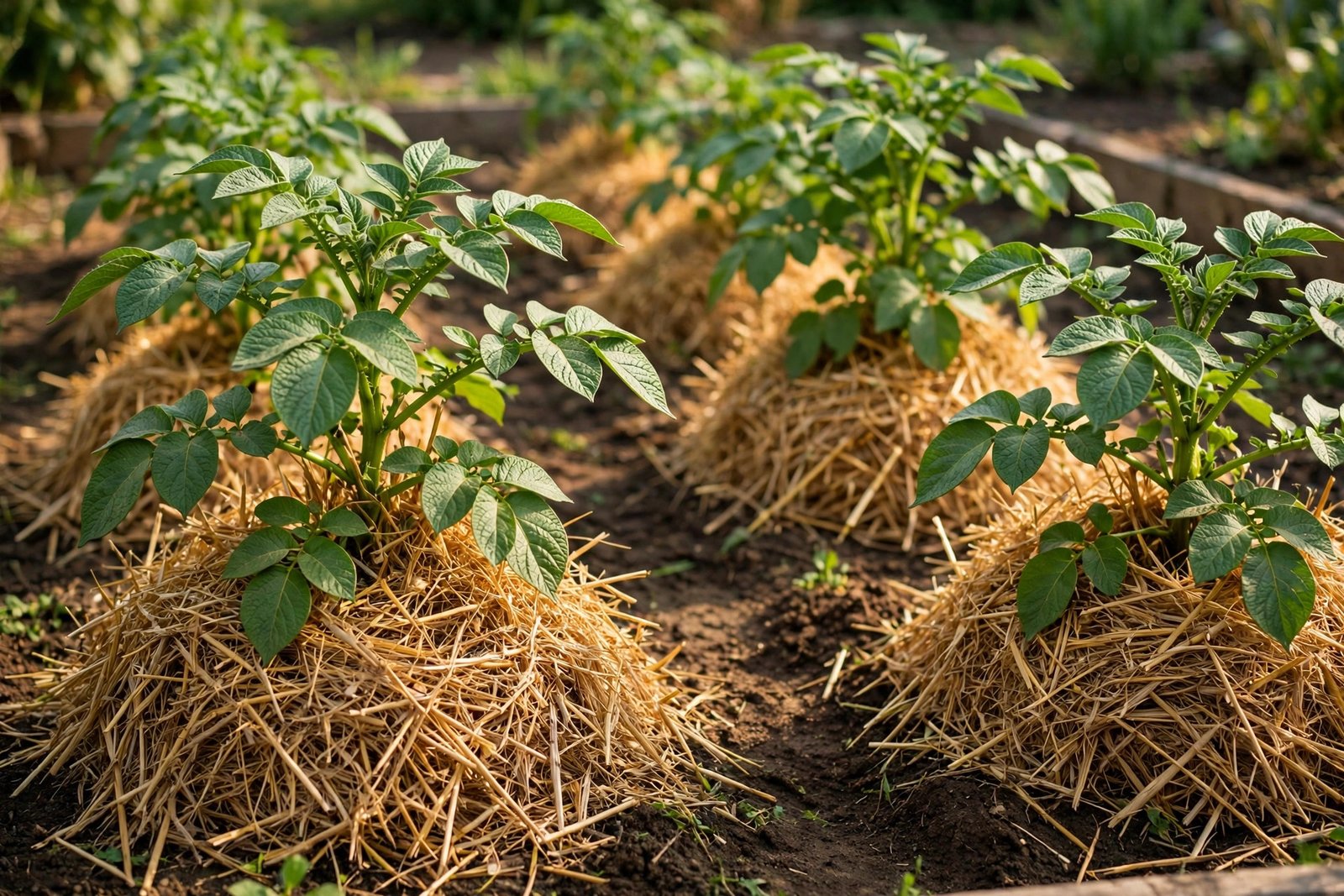
If you are learning how to hill potatoes with straw instead of soil, the method is the same, and both materials work, but they suit different gardens. Soil is the standard choice, because it is free, it is already there, and it packs around the stems. Straw is the lighter option, and it works well where the soil is heavy clay or where digging is hard on your back.
Straw hilling means piling loose straw 4 to 6 inches deep around the stems instead of soil, and topping it up as it settles. The straw keeps the light out just as well as soil, and it holds moisture in the bed. The drawback is that straw can shelter slugs, and it needs topping up more often. Whichever material you use, the tubers must stay covered from light at all times.
What happens if you do not hill potatoes?
The cost of skipping the job shows why knowing how to hill potatoes matters, and you can see it clearly at harvest. The tubers that form near the surface sit in sunlight, and sunlight turns them green. Green potatoes contain solanine, a natural toxin the plant makes to protect itself, and heavily green potatoes should not be eaten.
Our guide on are green potatoes safe to eat explains the discard rule in full, and the short version is simple: peel a small green patch deeply, and throw away a potato that is green through the flesh. Skipping hilling also costs you yield, because fewer stolons form when the lower stems stay above ground. The plant still grows, but you get fewer potatoes, and more of them are green.
Common hilling mistakes
A few mistakes catch new gardeners out when they first learn how to hill potatoes, and all of them are easy to avoid. The first is hilling too late, when the plants are already flowering and the tubers are exposed. The second is burying the whole plant, which stops growth and can kill a young plant outright. The third is hilling with wet, heavy soil, which clumps around the stems and damages them.
Another mistake is using fresh manure or uncomposted material as a hill, because it can burn the stems and brings weed seeds into the bed. Use plain garden soil, finished compost, or clean straw instead. In raised beds, the bed walls limit how much soil you can pull from the sides, so top up with compost or straw when the bed soil runs short. Our guide on growing potatoes in raised beds explains the soil mix and depth that make hilling easier in a bed.
Hilling schedule at a glance
Use this hilling schedule to judge how to hill potatoes at each stage of the season.
| Growth stage | What to do | Hill height |
|---|---|---|
| Shoots under 6 inches | Wait and watch | None yet |
| Plants 6 to 8 inches tall | First hilling with soil | Add 3 to 4 inches |
| Plants grown 6 inches more | Second hilling, 2 to 3 weeks later | Add 3 to 4 inches |
| Before flowering | Third hilling if needed | Total ridge 6 to 8 inches |
| Flowering and after | Stop hilling, cover exposed tubers | Top up only |
FAQ
Can you hill with straw?
Yes, you can hill with straw, and it works well. Pile loose straw 4 to 6 inches deep around the stems, and top it up as it settles. Straw keeps light off the tubers and holds moisture in the bed. Watch for slugs sheltering in damp straw.
How many times should you hill?
How to hill potatoes usually means hilling two or three times in a season. Hill the first time when the plants are 6 to 8 inches tall, again two or three weeks later, and a third time before flowering if the plants are still growing fast. Stop once the plants flower, and only top up after that if a tuber pokes through the soil.
Does hilling increase yield?
Yes, hilling can increase yield. Gardeners who learn how to hill potatoes well often pick more tubers from the same row, because buried stems form more stolons, and more stolons give the plant more places to grow tubers. The gain is real but modest, and hilling works best alongside steady watering, good soil and certified seed. It cannot fix drought, poor soil or disease on its own.
When should I stop hilling?
Stop hilling once the plants flower, because the tubers are already forming and the stems are tall enough to shade the soil. After flowering, only cover a tuber that pokes through the surface, with a handful of soil or straw. Keep watering steadily through the bulking stage, and dig on a dry day when the vines yellow. Our guide on how to harvest potatoes shows how to dig without damaging the tubers.
Can I hill potatoes in containers?
Yes, and the method for how to hill potatoes in containers is the same as in a bed. Add potting mix or straw around the stems as the plants grow, a few inches at a time, and leave the top leaves exposed. Containers and grow bags dry out fast, so water them more often than beds.