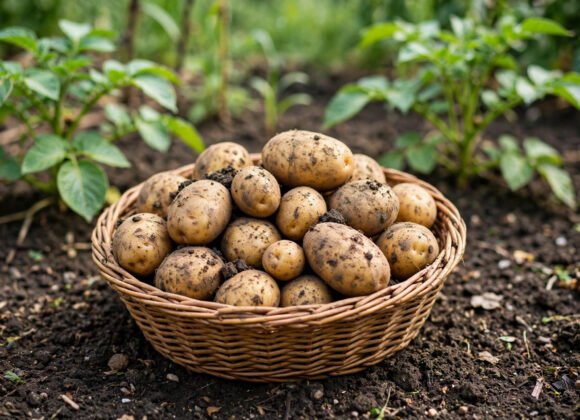

Growing potatoes in raised beds is one of the easiest ways to get a clean, heavy harvest from a small space. A raised bed gives loose soil, good drainage and an easier harvest. The rules are the same as in the ground: plant when the soil is 45 to 50 degrees Fahrenheit, plant pieces 4 to 6 inches deep and 10 to 12 inches apart, hill as plants grow and dig on a dry day.
This guide is about beds, not pots. Pots and grow bags are covered in our guide on how to grow potatoes in containers. A raised bed suits a gardener with a yard and a permanent bed, while a container suits a patio or a renter.
Table of Contents
Why growing potatoes in raised beds works
Growing potatoes in raised beds solves the two problems that cause the most trouble with potatoes in the ground: heavy soil and poor drainage. Potatoes need loose, well-drained soil so tubers can expand without becoming misshapen, and they rot in soil that stays wet.
Raised beds also make hilling easier, because loose mix sits right beside the plants. Hilling keeps developing tubers covered so sunlight cannot turn them green. Green potatoes contain solanine, and our guide on are green potatoes safe to eat explains why covered tubers matter.
Harvest is easier too. In a bed you can work from the edge with a fork, and the loose mix falls away from the tubers. In heavy ground soil, digging is harder and tubers get damaged more often. Our full harvest method is in the guide on how to harvest potatoes without damaging them.
A raised bed also warms up faster in spring, which is another reason growing potatoes in raised beds works well for gardeners with a short season.
How deep does a raised bed need to be for potatoes?
A raised bed for potatoes should be at least 12 inches deep, and 18 inches is better if you can build it. When growing potatoes in raised beds, the bed depth matters because tubers form above the seed piece, in the soil you hill up around the stems. A shallow bed does not leave enough room for the tubers to form and for the hilling mix to sit above the seed piece.
The seed piece goes 4 to 6 inches deep, and the plant needs several more inches of loose mix above it as you hill. A 12-inch bed gives you just enough room for both. An 18-inch bed gives comfortable room and better drainage. Deeper beds work fine, but cost more to fill.
If your bed sits on open ground, the soil below counts as well. If it sits on a hard surface, use the deeper end of the range and make sure water can drain out.
Bed sizes and how many plants fit
How many potatoes per raised bed depends on the bed size and on spacing. For raised bed potato spacing, use a 12-inch grid in all directions, which still leaves room to hill and to reach the plants. Plant pieces 10 to 12 inches apart. In the ground, rows sit 30 to 36 inches apart, but when growing potatoes in raised beds you can tighten the rows a little, because you reach in from the sides and never walk on the bed.
| Bed size | Plants at 12-inch spacing | Notes |
|---|---|---|
| 4 by 4 feet | About 12 to 16 plants | Easy to reach from all sides. |
| 4 by 8 feet | About 24 to 32 plants | Reachable from both long sides. |
| 3 by 6 feet | About 12 to 18 plants | Good for a narrow yard. |
| 2 by 8 feet | About 12 to 16 plants | A single row bed. |
Spacing is the same whether you are growing potatoes in raised beds or in the ground, 10 to 12 inches apart, but beds let you use a tight grid instead of wide rows.
If you plant at 10 inches apart instead of 12, you will fit a few more plants, but the tubers may be smaller. Do not plant closer than 10 inches apart. Crowded plants compete for water and light, and disease spreads faster.
Do not plant potatoes where tomatoes, peppers or eggplants grew last year. Rotate to a different bed each year. The full planting method is in our guide on how to plant potatoes.
What soil mix works in a raised bed?
Potatoes want loose, well-drained, fertile soil. The best soil mix for growing potatoes in raised beds is a loose mix of equal parts topsoil, compost and a drainage material such as coarse perlite or vermiculite, or bark fines. The compost feeds the plants and holds some moisture. The perlite or bark keeps the mix open so water drains and tubers can expand. Do not fill a bed with garden soil alone. Garden soil packs down in a bed, holds too much water and can carry soil-borne disease.
Potatoes prefer slightly acidic soil, around pH 5.8 to 6.5. A soil test through your Extension lab is the best way to know what your soil needs. Work compost into the top few inches before planting, but avoid fresh, uncomposted manure right at planting.
Fill the bed to a few inches below the rim, so you have room to add mix as you hill. The exact depth and spacing chart for planting is in our guide on how deep to plant potatoes.
Planting, watering and hilling when growing potatoes in raised beds
Raised bed potato planting starts when the soil in the bed is 45 to 50 degrees Fahrenheit and workable, usually 2 to 4 weeks before your last expected spring frost. Beds warm up faster than ground soil in spring. Full timing by zone is in our guide on when to plant potatoes.
Water about 1 to 2 inches per week, especially when plants flower, because that is when tubers are forming. Beds dry out faster than ground soil, so check the mix often. Water slowly at the base rather than overhead, which keeps foliage dry and reduces blight.
Hill when plants are 6 to 8 inches tall. Pull loose mix up around the stems from the sides of the bed, leaving just the top leaves showing. Repeat every few weeks. Keep tubers covered at all times. Any tuber that sees sunlight can turn green.
Feed according to a soil test.
How to harvest from a raised bed
Growing potatoes in raised beds makes harvest easier. Dig on a dry day with a fork, starting at the edge of the hill, about 12 inches from the centre, and lift gently. In a bed you can also reach in with gloved hands and feel for tubers. New potatoes can be dug gently 2 to 3 weeks after flowering. For mature storage potatoes, wait until vines yellow and die back, then test one hill.
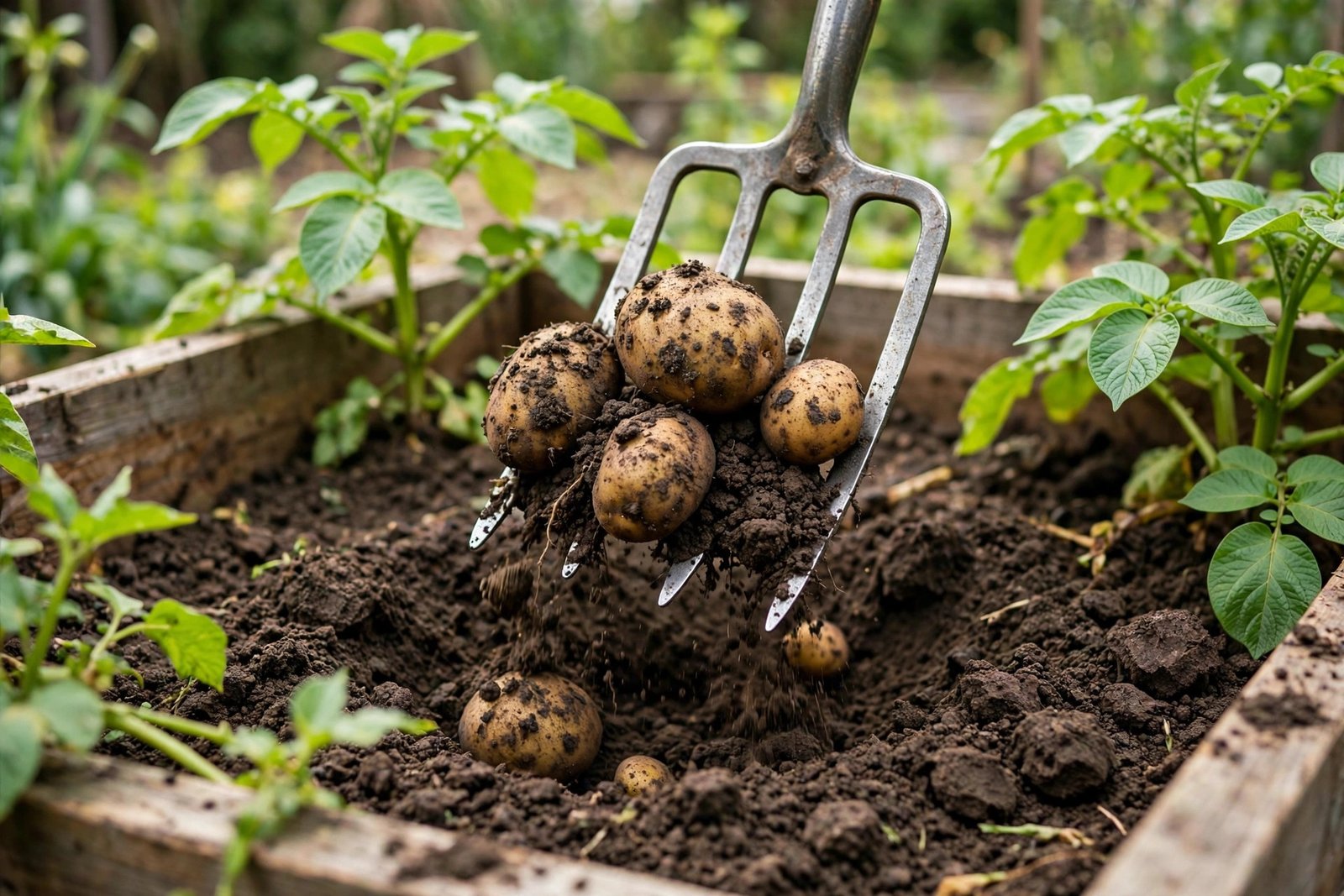
Do not wash potatoes after digging. Brush off loose soil, let them dry in shade, then cure them for about one to two weeks so skins thicken and small nicks heal. The full method is in our guide on how to harvest potatoes without damaging them.
FAQ
Is a raised bed better than the ground for potatoes?
It depends on your soil. If your ground soil is heavy, wet or full of stones, growing potatoes in raised beds is better, because you control the mix and the drainage. If it is already loose and well drained, rows work just as well and cost less.
What soil mix works for potatoes in a raised bed?
A loose mix of equal parts topsoil, compost and perlite or vermiculite. Do not use garden soil alone.
How deep should a raised bed be for potatoes?
At least 12 inches, and 18 inches is better if you can build it. The seed piece goes 4 to 6 inches deep, and you need several more inches of loose mix above it for hilling.
How many potatoes per 4 by 4 bed?
About 12 to 16 plants at 12-inch spacing.
How do you harvest potatoes from a raised bed?
When growing potatoes in raised beds, dig on a dry day with a fork, starting at the edge of the hill about 12 inches from the centre. The loose mix makes it easy. Do not wash tubers before storage, brush off loose soil, cure them and store them cool, dark and ventilated.