Potato blight is the potato disease most home growers worry about, and early blight and late blight are not the same problem. One of them moves slowly and usually costs you leaves, while the other can take a whole planting down in a matter of days when the weather turns cool and wet. The trouble is that both of them start as brown spots on the leaves, so it is easy to mix them up and treat the wrong one. This guide explains both forms of potato blight, shows you how to tell them apart at a glance, and walks through the simple habits that keep them out of your garden in the first place.
Table of Contents
Two diseases, one name
Gardeners use the single word blight for two different diseases, and that is where most of the confusion about potato blight starts. Early blight is caused by a fungus called Alternaria solani, and it is the common one that shows up on older leaves as the plants mature. Late blight is caused by a water mould called Phytophthora infestans, and it is the rare but far more destructive one that caused the Irish potato famine in the 1840s.
Both diseases attack potatoes and tomatoes, because both crops belong to the nightshade family, so a problem on one crop can spread to the other. Knowing which one you are looking at matters, because early blight can usually be slowed down while late blight needs fast action and sometimes means giving up the plants to protect the rest of the garden.
Early blight signs to look for
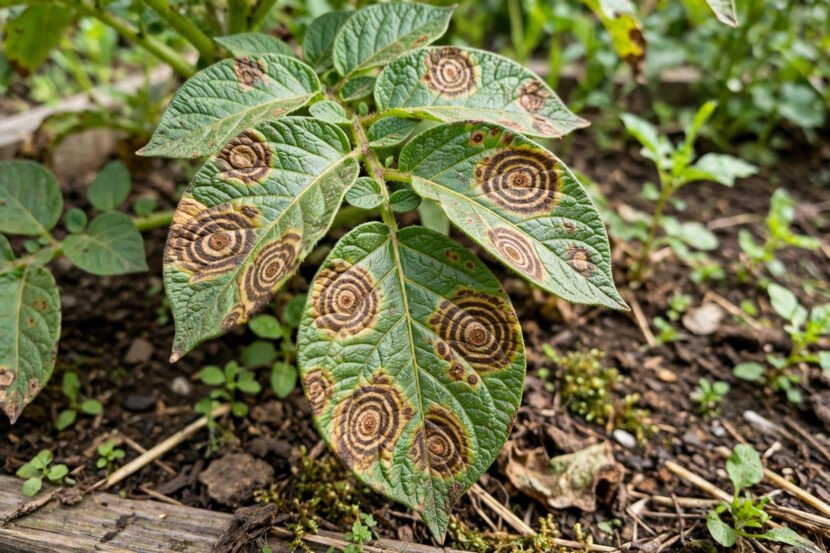
Early blight usually appears first on the lower, older leaves, and it works its way up the plant over several weeks. The spots are dark brown circles about a quarter of an inch across, and they have a clear pattern of concentric rings inside them that looks like a target. The leaf tissue around the spots often turns yellow, and badly infected leaves dry out and drop off, which leaves the plant with fewer leaves to feed the tubers.
Similar spots can show up on the stems later in the season, and in rare cases the tubers can carry sunken spots with brown flesh underneath, although tuber rot from early blight is uncommon. The fungus behind early blight likes warm, humid weather, and it survives the winter in infected tubers, in old potato debris and in the soil. Its spores travel on the wind, and they infect leaves that stay wet for a few hours, which is why a rainy spell followed by warm days often brings the first spots.
That slow climb up the plant is typical of potato blight in its early form, and it gives you time to act. Early blight is the form of potato blight you are most likely to see, and it shows up most often in July and August as the plants start to mature.
Late blight signs to look for
Late blight looks very different once you know what to look for, and speed is the biggest clue. The first spots are dark, greasy green or water-soaked patches on the leaves, and they are not held back by the veins the way early blight spots are, so they grow across the leaf quickly. In damp weather the spots enlarge fast, turn black-brown, and a faint white fuzz appears on the underside of the leaf near the edge of the spot.
The stems can develop firm, dark brown lesions, and in cool, wet weather a whole planting can turn brown and wilted within days, as if it had been hit by frost. The tubers are at risk too, because rain can wash the spores down through cracks in the soil, and infected tubers turn pink, purple or dark metallic on the surface with rusty brown flesh inside.
Late blight favours cool, damp conditions, roughly 60 to 70 degrees Fahrenheit with high humidity, and Utah State University Extension notes that it develops when temperatures sit between 50 and 78 degrees and relative humidity stays above 90 percent. Its spores can blow for miles in a storm, so an outbreak in a neighbouring garden can reach yours even when your own plants started the season healthy. That speed and reach are what make late blight the most feared form of potato blight.
Early blight vs late blight at a glance
If you want a quick answer to what potato blight looks like, the table below puts the two forms side by side so you can compare them in seconds.
| Clue | Early blight | Late blight |
|---|---|---|
| Cause | Alternaria solani, a fungus | Phytophthora infestans, a water mould |
| First spots | Small dark circles with concentric rings | Large greasy, water-soaked patches |
| Where it starts | Lower, older leaves | Any leaf, often after cool wet weather |
| Speed | Slow, spreads over weeks | Very fast, can kill plants in days |
| Leaf underside | No white fuzz | White fuzz near the spot edge in damp air |
| Weather it likes | Warm and humid | Cool, 60 to 70°F, and very damp |
| Tubers | Rarely rotted | Often rotted, with pink or purple skin |
Is early blight worse than late blight?
No, late blight is the worse of the two by a long way, even though early blight is the one you will see more often. Early blight takes leaves away gradually, and a plant that loses its lower leaves can often keep growing and still produce a useful harvest, especially when the disease arrives late in the season. Late blight moves so fast that it can defoliate and kill the whole plant, and it can rot the tubers in the ground, so there may be nothing worth digging.
That is why the response is different too, because early blight calls for steady cleanup and prevention while late blight calls for fast removal of infected plants before the spores reach the neighbours. The two forms of potato blight differ most in speed, and speed is what decides how much of the crop you keep. If you only remember one thing from this guide, let it be the speed test, because a spot that doubles in a day or two after cool, wet weather points to late blight and needs action the same day.
Can blighted potatoes be saved?
That depends on which blight you have and how far it has gone, and the honest answer is that prevention saves far more potatoes than any cure. Tubers from plants with a mild case of early blight are usually fine to eat, because early blight rarely rots the tubers, so you can dig them, peel away any damaged skin and cook them as normal. Tubers from plants with late blight are a different story, because the rot runs deep into the flesh and the tubers keep decaying in storage, so badly infected tubers should be thrown away rather than stored or eaten.
Do not plant any tuber that shows blight damage, and do not save tubers from an infected planting as seed for next year, because the disease can overwinter in them and start the whole problem again. If late blight hits your plants, the practical move is to let the vines dry out for two to three weeks before you dig, because Utah State University Extension explains that the pathogen cannot survive on dry, dead plant material, and that waiting period keeps the spores from washing down onto the tubers.
That is the practical side of living with potato blight, because you cannot undo an infection once it is inside the plant. Then dig carefully, sort the tubers, and eat the sound ones soon rather than storing them for months.
How to prevent potato blight with 7 habits
Prevention is where you win against potato blight, because neither disease can be cured once it is well established, and the seven habits below cover the whole season from planting day to harvest.
- Start with certified seed potatoes, and never plant grocery store potatoes or tubers saved from last year. Certified seed is inspected for disease, and it is the single most important step, because both forms of potato blight can travel into the garden inside an infected tuber. Our guide on how to prepare seed potatoes explains how to handle certified seed before planting.
- Rotate your beds, and do not plant potatoes, tomatoes, peppers or eggplants in the same spot for three to four years. The fungi survive in soil and old plant debris, so a new spot each year breaks their cycle. Our beginner guide on how to plant potatoes covers rotation as part of planning the bed.
- Give the plants room to breathe, with wide spacing and rows that let air move between the plants. Crowded plants stay wet longer after rain or watering, and wet leaves are where both blights start.
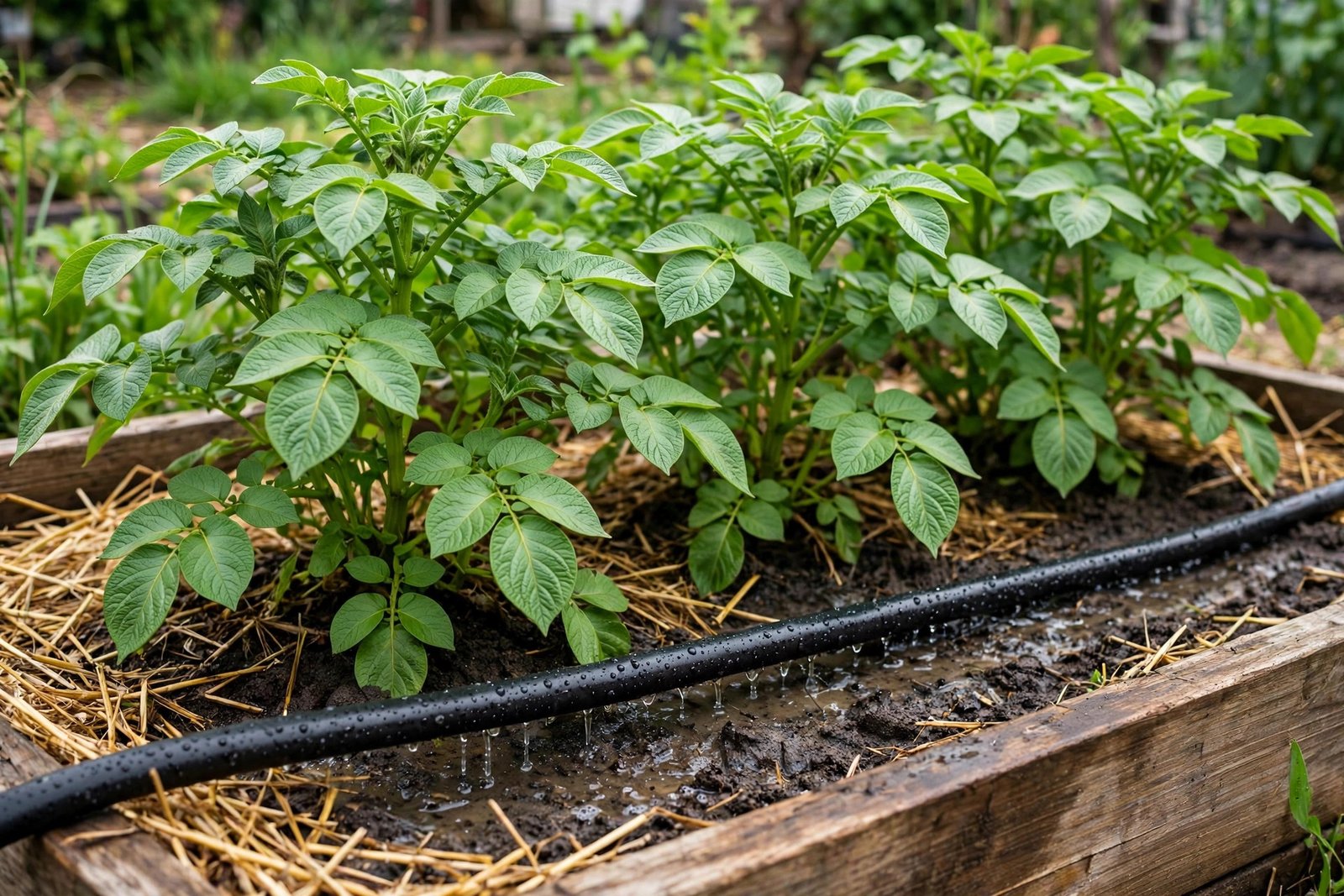
- Water at the base of the plants, in the morning, and keep the leaves as dry as you can. A soaker hose or drip line is better than a sprinkler, because overhead watering wets the foliage and splashes soil onto the lower leaves. Our guide on how often to water potatoes explains the watering routine in full.
- Mulch under the plants and hill soil up around the stems as they grow. Mulch stops soil from splashing onto the leaves, and hilling covers the young tubers so spores washed down by rain cannot reach them. Our guide on how to hill potatoes shows the hilling steps.
- Scout the plants once a week, starting from the lower leaves, and pull off any spotted leaf as soon as you see it. Early removal slows early blight down, and it gives you the best chance of catching late blight before it spreads.
- Clean up at the end of the season, and remove every vine, tuber and cull pile from the garden. Do not compost diseased plants, because a home compost pile does not get hot enough to kill the pathogens, so bag the material and throw it away.
What to do when you find blight
Quick action is the only real treatment for potato blight once the spots appear, so do not wait to see whether they spread. If you find spotted leaves, pick them off, put them straight into a bag and throw the bag away, and wash your hands and tools before you touch healthy plants. When several plants show the fast, water-soaked spots of late blight, pull the whole plants out rather than trying to save them, because leaving them in the ground only gives the spores more time to spread to the neighbours and to your tomatoes.
Do not add diseased plants to the compost pile, and do not leave cull potatoes lying around the garden, because late blight survives the winter in infected tubers and cull piles. If you are unsure which blight you have, take clear photos of the top and underside of a spotted leaf and contact your local Extension office, because a wrong guess can cost you the crop. And if the plants have to come out, remember that the harvest is not always lost, because our guide on when to harvest potatoes explains how to check whether the tubers are worth digging.
Can blight spread to tomatoes?
Yes, both early blight and late blight can spread to tomatoes, because potatoes and tomatoes are close relatives in the nightshade family and share the same pathogens. That is why the two crops should never sit side by side, and why the three to four year rotation rule covers tomatoes, peppers and eggplants as well as potatoes. The University of Minnesota Extension guide to late blight notes that the disease can arrive on infected tomato transplants shipped in from other regions, so inspect every transplant before it goes into the ground and buy from a trusted source.
If blight appears on your potatoes, check your tomatoes the same day, and treat a spotted tomato plant with the same urgency, because spores move on wind and rain and do not respect the gap between beds. That shared risk is why potato blight is a whole-garden problem, not just a potato problem.
FAQ
Should I remove blighted plants?
Yes, remove the affected leaves as soon as you spot them, and pull out whole plants when late blight is spreading fast. Bag the material and throw it away, and never compost it, because home compost does not get hot enough to kill the pathogens. Cleaning up quickly is the best way to protect the healthy plants that are left.
Does watering cause blight?
Watering does not cause blight on its own, because the spores have to be present first, but wet leaves give the spores the conditions they need to infect the plant. Overhead watering and evening watering keep the leaves wet for hours, which is why watering at the base in the morning is one of the best habits against potato blight.
Can blight survive winter?
Yes, both blights can survive the winter, and that is why cleanup matters so much. Early blight survives in infected tubers, in old plant debris and in the soil, while late blight survives in infected tubers and in cull piles that are left out over winter. Removing every vine and tuber at the end of the season, and planting certified seed the next spring, breaks the potato blight cycle for next year.
Can I eat potatoes from blighted plants?
You can eat tubers from plants with mild early blight, because that disease rarely rots the tubers, so peel away any damaged skin and cook them as normal. Do not eat tubers that show late blight rot, because the decay runs deep into the flesh and keeps spreading in storage, so throw those tubers away.
Is early blight worse than late blight?
No, late blight is far worse, because it moves in days rather than weeks and it can rot the tubers as well as kill the foliage. Early blight is more common and slower, and plants can often keep producing even after they lose some lower leaves. The speed of the spread is the simplest way to tell them apart.