
How to store potatoes so they last for months comes down to four simple conditions, and none of them needs special equipment. The tubers need a cool spot, total darkness, steady airflow and high humidity, and they need to go into that spot cured, dry and unwashed. When those conditions are met, a homegrown harvest can keep for four to six months, which carries a family from the autumn dig through most of the winter. When one of them is missing, the same potatoes sprout, shrivel or rot within weeks. This guide covers the full method, from curing to the weekly check, and the mistakes that cut storage life short.
Table of Contents
The four conditions that decide how long potatoes keep
Learning how to store potatoes starts with understanding what a stored tuber is doing, because a potato in storage is still alive. It breathes, it loses moisture through its skin, and it slowly uses up the starch inside. Cold slows all of that down, darkness stops the skin turning green, airflow carries away the moisture that feeds mould, and humidity stops the tubers drying out and going soft. University of Minnesota Extension puts the ideal at dark, cold and moist conditions, around 32 to 40 degrees Fahrenheit with very high humidity, while Utah State University Extension gives a practical home range of 40 to 45 degrees for the winter store.
The range for this guide is 38 to 45 degrees, which sits inside both of those recommendations and is a temperature a cool basement or an unheated garage can often hold.
That balance of cold, dark, moist and ventilated air is the heart of how to store potatoes for months.
| Condition | Target | Why it matters |
|---|---|---|
| Temperature | 38 to 45°F | Cold slows sprouting and rot, but below 38°F the starch turns to sugar and the potatoes taste sweet |
| Light | Total darkness | Light turns skins green and raises solanine, which tastes bitter |
| Airflow | Steady and gentle | Moving air carries surface moisture away and stops mould |
| Humidity | High, around 85 to 95% | Moist air stops tubers drying out, shrinking and going soft |
| Time | 4 to 6 months | Well stored mature potatoes keep this long, if they are checked often |
Cure first, then store
No storage method works on potatoes that were never cured, because curing is what turns a thin-skinned new tuber into a tough-skinned storage tuber. After digging, the skins need ten to fourteen days in a dark, ventilated spot at 50 to 60 degrees with high humidity, so small cuts and scrapes can heal over and the skin can thicken. Potatoes that go straight from the garden into cold storage lose moisture fast, bruise easily and rot sooner, so curing is the step that buys the months.
That is why knowing how to store potatoes well begins with curing, not with the storage room. Our step-by-step guide on how to cure potatoes covers the full method, including the temperature range and the signs that curing is done. Only mature potatoes are worth curing and storing, because new potatoes are meant to be eaten within days. If you are unsure which ones you dug, our guide on when to harvest potatoes explains the skin-set test, and that test is the first step in how to store potatoes that actually keep.
How to store potatoes step by step
Once the potatoes are cured, the move into storage is a gentle job, and it is worth doing slowly. The seven steps below show how to store potatoes from the curing pile to a winter store that you can leave alone for weeks at a time.
- Sort the cured tubers and set aside every damaged one, because a cut, bruised or soft potato will not keep and should go into the kitchen first. Only sound, firm tubers with dry, tough skins belong in long storage.
- Brush the loose, dry soil off by hand, and do not wash the potatoes before storage. Water on the skins invites rot, and the tubers should go into their containers dry, with just a little dry soil still clinging to them.
- Pick a container that breathes, such as a wooden crate, a bushel basket, a paper bag or a mesh bag. The container must let air move through it, so never use a sealed plastic bag or a lidded bin with no holes.
- Pack the potatoes loosely, in shallow layers, and leave space between the tubers so air can reach every one. A deep pile traps moisture in the middle, and the potatoes at the centre rot first.
- Move the containers into the coolest dark spot you have, and cover them with a cloth, newspaper or cardboard if the room has any light at all. Even a little light over a long winter will turn the top layer green.
- Check the temperature where the potatoes actually sit, not just the room in general. A simple thermometer on top of the crate tells you whether the spot holds between 38 and 45 degrees through cold nights and mild days.
- Leave the potatoes alone, and check them once every week or two through the winter. Pick out any tuber that turns soft, smells bad or starts to rot, because one rotting potato can spread decay to the ones touching it.
Where to store potatoes at home
Most homes have a spot that works, once you measure it instead of guessing. The spot you choose is the biggest single factor in how to store potatoes successfully, so it is worth testing with a thermometer before you fill a crate. A cool basement corner is the best option for most growers, because a basement stays cool and humid on its own, and a corner away from the furnace holds a steady temperature. An unheated garage works too, as long as the temperature stays above freezing and below 50 degrees through the winter, so check it with a thermometer on the coldest nights.
A spare closet on an outside wall, a pantry away from the stove, or an enclosed porch can all work in mild climates, because they are dark and cooler than the rest of the house. Our guide on how to harvest potatoes shows the gentle digging method that keeps damage low before curing and storage even start. Wherever you store them, keep the potatoes away from heat sources, keep them off a damp floor, and keep them where you will actually remember to check them, because a forgotten pile is a rotting pile.
What container is best?
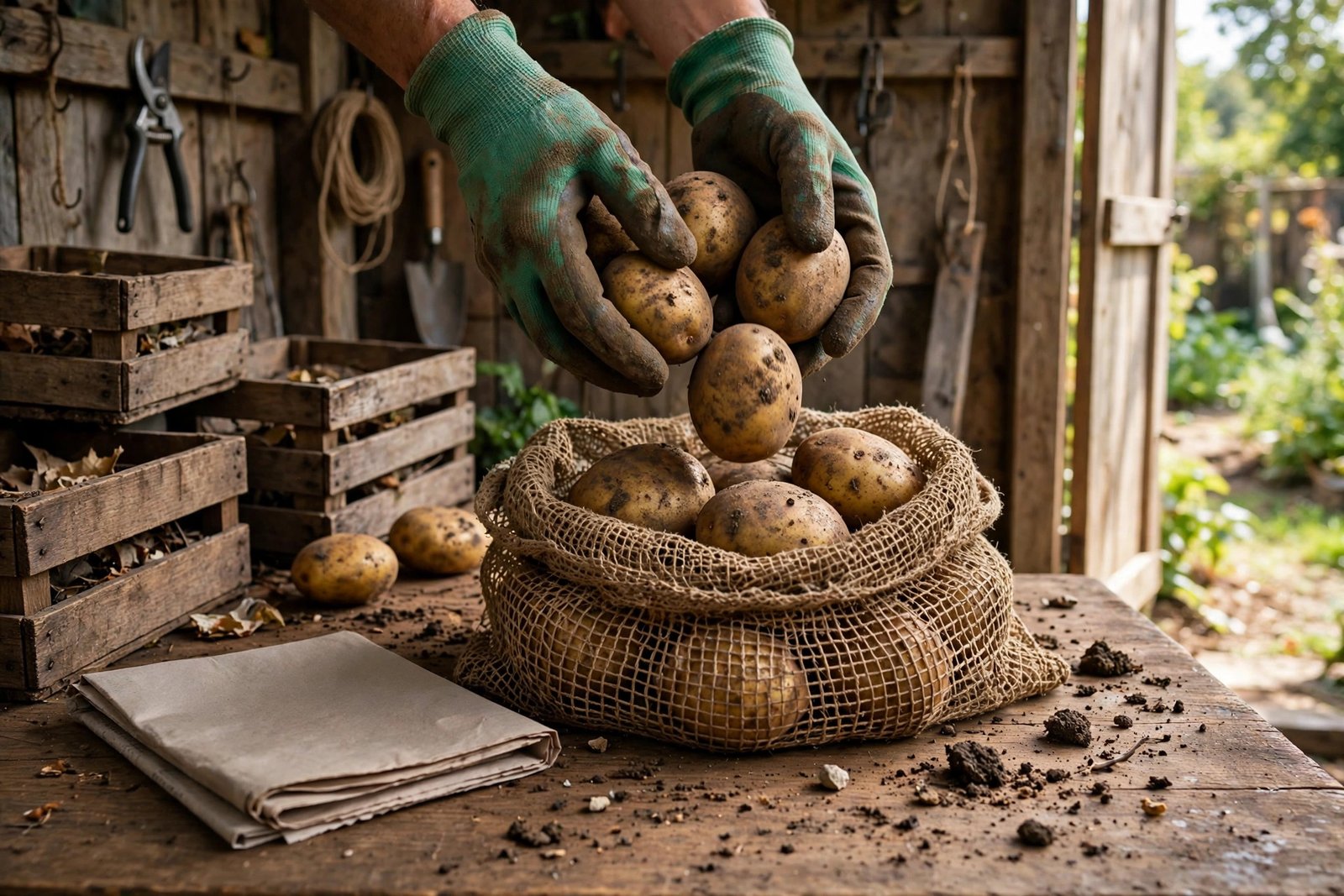
The container is the second half of how to store potatoes well, because it controls light and airflow around every tuber. A wooden crate or a slatted bushel basket is the classic choice, because the gaps let air through and the wood absorbs a little moisture. A paper bag works well for a small harvest, because paper breathes and blocks light at the same time, though you should leave the top open or punch a few holes in it. A mesh or burlap bag is another good option, because air passes straight through the weave, and you can see the potatoes inside without emptying the bag.
A cardboard box with holes punched in the sides works too, and a layer of newspaper over the top blocks any light that gets in. What matters most is what the container is not, because a sealed plastic bag traps moisture, a plastic tub with a tight lid does the same, and a deep bin with no airflow rots the potatoes in the middle. Line the bottom of any container with newspaper, pack the tubers loosely, and keep the container off a concrete floor on a wooden pallet or a shelf, because a cold, damp floor chills the bottom layer and invites rot.
What not to store next to potatoes
Potatoes should be stored on their own, away from onions and away from fruit, because their neighbours can cut storage life short in different ways. Onions give off moisture and gases that push potatoes toward sprouting, and potatoes give off moisture that makes onions go soft, so the two crops spoil each other when they share a box. Apples, pears and other ripening fruit give off ethylene gas, and Utah State University Extension warns that this gas makes potato tubers sprout, so fruit should never sit in the same crate or on the same shelf.
The rule is simple, and it is worth following even when space is tight: give potatoes their own container, their own shelf and their own corner. If you only have one cool spot in the house, use separate crates with a gap between them, and keep the fruit in the kitchen where it belongs. Separation is a small detail of how to store potatoes, but it is one of the easiest wins in the whole method.
Should potatoes be refrigerated?
A refrigerator is not a good place for long-term potato storage, even though it is cold and dark. Most refrigerators run colder than 38 degrees, and below that point the starch inside the tuber starts turning into sugar, so the potatoes taste sweet and fry dark brown. The moist air inside a fridge also encourages sprouting, and a crisper drawer has almost no airflow, so the tubers sit damp for months. That is why the answer to whether you can store potatoes in the fridge is that a fridge works for a few weeks at most, and only for potatoes you plan to cook soon.
If the fridge is the only cold dark spot in your home, use the warmest part of it, keep the potatoes in a paper bag rather than plastic, and move them to room temperature for a week before cooking, because the sweet taste fades once the potatoes warm up again. For a harvest meant to last months, a cool basement or garage beats a refrigerator every time, and that choice is part of knowing how to store potatoes for the long term. In short, the fridge fails the test of how to store potatoes for months, even though it passes the test of keeping them cold.
Why do stored potatoes sprout, and how long do they last?
Stored potatoes sprout because they are alive and waiting for spring, and warmth, light and time all push them toward it. That is why warmth is the enemy in how to store potatoes, and why the pile should sit as close to 40 degrees as you can manage. Sprouting starts fastest above 50 degrees, which is why a warm pantry can turn a good harvest into a sprouting pile within two or three months. Light speeds it up too, and so does the ethylene gas from nearby fruit, which is why darkness and separation from fruit matter as much as temperature.
A few small sprouts are not a disaster, because you can rub them off and cook the potato, though you should cut away any green skin and never eat the sprouts themselves. How long homegrown potatoes last in storage depends on the variety, the curing and the spot, but well cured mature potatoes kept dark, cool and ventilated commonly keep for four to six months. Late-season varieties bred for storage keep longest, while thin-skinned early varieties keep for a shorter time. That four to six month range is a realistic expectation, not a guarantee, and it assumes you check the pile often and pull out any tuber that starts to go soft.
Mistakes that cut storage life short
The most common mistake people make when they first learn how to store potatoes is washing the tubers before storage, because wet skins and damp piles are an open invitation to rot. The second mistake is storing them warm, in a kitchen cupboard or a heated room, because temperatures above 50 degrees push the potatoes toward sprouting within weeks. The third mistake is using a sealed container, because trapped moisture rots the middle of the pile first. The fourth mistake is storing potatoes next to onions or fruit, because the gases and moisture from the neighbours shorten the life of the whole crate. The fifth mistake is skipping the weekly check, because one rotting tuber can spread soft rot to its neighbours in days, so a quick look through the pile every week or two is worth the effort.
Our guide on are green potatoes safe to eat explains why greening matters and when a potato should be thrown away, and that rule applies in storage just as much as it does in the garden. Get the curing right, keep the pile cool, dark and ventilated, and check it often, and a homegrown harvest will feed your kitchen for months. Each of these mistakes breaks one of the four conditions, and that is the whole lesson of how to store potatoes: keep them cool, dark, ventilated and humid, and they will keep for you.
FAQ
Can I store potatoes in a basement?
Yes, a cool basement is one of the best places to store potatoes at home. A basement corner away from the furnace usually stays cool and humid on its own, which is exactly what stored potatoes need. Pack the cured tubers loosely in a ventilated crate or basket, cover the top with newspaper to block any light, and check the temperature with a thermometer to make sure the spot holds between 38 and 45 degrees. Learning how to store potatoes in a basement is mostly about finding the coolest, darkest corner and then checking the pile every week or two through the winter.
Do potatoes and onions store together?
No, potatoes and onions should not be stored together, because they spoil each other. Onions give off moisture and gases that push potatoes toward sprouting, and potatoes give off moisture that makes onions go soft and rot. Give each crop its own container and its own shelf, with a gap between them, even if they share the same cool room. If you only have one cool spot in the house, separate crates with space between them are enough, as long as the two crops never touch.
What container is best for storing potatoes?
The best container is one that keeps the potatoes dark and lets air move freely, such as a wooden crate, a slatted bushel basket, a paper bag or a mesh bag. Paper bags work well for a small harvest, because paper breathes and blocks light at the same time. Mesh and burlap bags are good too, because air passes through the weave and you can see the potatoes inside. Never use a sealed plastic bag or a lidded bin with no holes, because trapped moisture rots the potatoes in the middle of the pile first.
How long do stored potatoes last?
Well cured mature potatoes kept dark, cool and ventilated commonly last for four to six months. That four to six month window is the payoff for getting how to store potatoes right from curing day onward. That range assumes the potatoes were cured for ten to fourteen days, stored between 38 and 45 degrees, kept away from light, onions and fruit, and checked every week or two. Potatoes stored warmer than 50 degrees may only last two or three months before they sprout and go soft, and thin-skinned early varieties keep for a shorter time than late-season storage varieties.
Can you store potatoes in the fridge?
You can keep potatoes in the fridge for a few weeks, but a refrigerator is not a good place for long-term storage. A fridge can hold a small bag for a few weeks, but it is not the answer to how to store potatoes for months. Most fridges run colder than 38 degrees, and below that point the starch turns to sugar, so the potatoes taste sweet and fry dark brown. The moist, still air in a crisper drawer also encourages sprouting. For a harvest meant to last months, a cool basement or garage is a far better choice, and a fridge should only be a short-term stop for potatoes you plan to cook soon.
Sources and further reading
- University of Minnesota Extension, Growing potatoes in home gardens: https://extension.umn.edu/garden-and-home/yard-and-garden/gardening-in-minnesota/growing-potatoes
- Utah State University Extension, How to Grow Potatoes in Your Garden: https://extension.usu.edu/yardandgarden/research/potatoes-in-the-garden
- Kansas State University Extension, Growing Potatoes: https://www.johnson.k-state.edu/programs/lawn-garden/agent-articles-fact-sheets-and-more/agent-articles/vegetables/growing-potatoes.html
- North Dakota State University Extension, Dakota Gardener: How to plant potatoes: https://www.ag.ndsu.edu/news/columns/dakota-gardener/dakota-gardener-how-to-plant-potatoes/