
Potato scab is the most likely reason your harvest comes out of the ground looking rough and patchy, even when the plants above ground looked healthy all season. The rough brown patches are not a sign that your potatoes are rotten or unsafe, because potato scab is a skin disease that usually leaves the flesh underneath perfectly fine. This guide explains what causes it, how to tell it apart from other tuber problems, and the steps that keep it from coming back next year.
Table of Contents
What does potato scab look like?
The first sign of potato scab shows up at harvest, when you brush the soil off a tuber and find rough, corky patches on the skin. The patches are usually tan to dark brown, and they can sit flat on the surface, rise up like a rough crust, or sink in as shallow pits. On some varieties the patches spread and join together until most of the skin looks rough, while on others you only see a few small spots.
The flesh under a scab patch is usually normal, and the leaves and stems of the plant look fine all season, because the disease only affects the tubers. That is why the problem often comes as a surprise, since nothing above ground warns you that the tubers are marked underneath.
What causes potato scab?
Potato scab is caused by a soil bacterium called Streptomyces scabies, which lives in most garden soils whether or not you have ever seen scab before. The bacteria enter young tubers through tiny breathing pores called lenticels and through small wounds in the skin, and they release a toxin that kills the skin cells around the entry point. The plant answers by building corky tissue over the damaged spot, and that cork is the rough patch you see at harvest. Tubers are most open to infection during the first three to four weeks after they start to form, so the conditions in that short window decide how bad the scab will be.
The disease is worst in warm, dry soil with a pH above 5.2, and North Dakota State University Extension notes that low soil moisture during tuber formation, a pH between 5.2 and 8.0, and daytime temperatures above 70 degrees Fahrenheit all favour it. Fresh manure, lime and wood ash can make the problem worse, because they raise the soil pH and give the bacteria the alkaline conditions they prefer. The bacteria can also ride into a clean bed on infected seed tubers, so seed that already carries scab can start the problem in soil that was fine before.
Potato scab or something else?
Not every rough patch on a potato is scab, so it helps to compare the marks before you decide what to change. The table below puts the common tuber problems side by side.
| Problem | What it looks like | What causes it | Can you eat it |
|---|---|---|---|
| Common scab | Rough, corky brown patches on the skin, flat, raised or pitted | Soil bacterium Streptomyces scabies | Yes, after peeling |
| Powdery scab | Small raised blisters that burst into powdery brown sores | Fungus Spongospora subterranea | Yes, after peeling, but it spreads differently |
| Black scurf | Hard black spots that stick to the skin like dirt that will not wash off | Fungus Rhizoctonia solani | Yes, after washing and peeling |
| Greening | Skin turns pale green where light reached the tuber | Light exposure, solanine forms under the skin | No, cut away all green parts or discard |
If you are unsure which problem you have, compare the tuber with the table above and look at the whole plant as well. Scab never touches the leaves or stems, so a plant with spotted or wilting leaves has a different problem, and our guide on potato blight explains how to tell a leaf disease from a tuber problem. A laboratory test can settle the question when the patches look unusual, because common scab and powdery scab look alike, and only a lab can tell them apart with certainty.
Are potatoes with scab safe to eat?
Yes, a potato with potato scab is safe to eat once you peel it, because the damage stays in the skin and the flesh underneath is normal. Cut away any deep pits and peel the skin off, and the rest of the potato cooks and tastes like any other potato. Potato scab does not make the flesh poisonous, and peeling removes the whole problem.
The only time to be careful is when a scab patch has cracked open and soft rot has moved in, because a tuber that smells bad or feels soft and mushy should go in the compost or the trash rather than the pot. Store scabby potatoes in a cool, dark and dry place, and check them now and then, because a damaged spot can let rot start during storage. Our guide on how to store potatoes covers the temperature and darkness rules that keep stored potatoes in good shape.
Does scab ruin the crop?
In most home gardens potato scab is a cosmetic problem rather than a crop failure, because the total yield barely changes even when many tubers are marked. The plants keep growing normally, the tubers keep sizing up, and the harvest is the same weight it would have been without the disease.
What you lose is appearance and peeling time, because a badly pitted tuber takes longer to peel and leaves less flesh behind, and a grower selling at a market would have to sort the rough ones out. For a home gardener the harvest is still a good harvest, as long as you peel the potatoes before cooking and store them properly. The real cost of scab is that it comes back, because the bacteria stay in the soil and the same bed will produce scabby potatoes again next year unless you change the conditions.
How to prevent potato scab
No single trick removes potato scab from a garden, because the bacteria live in most soils, but a few changes together can cut it down to a few small spots or none at all. The steps below work best as a set, and the first three matter the most.
- Test your soil before you change it. A soil test from your local Extension office tells you the pH and the nutrient levels, and it keeps you from guessing with lime or sulphur. Potatoes grow well in slightly acidic soil, and scab is held back when the pH stays below 5.5, so the test tells you whether your soil is already in the safe range or needs work. Our guide on best soil for a vegetable garden explains how to test and read the result.
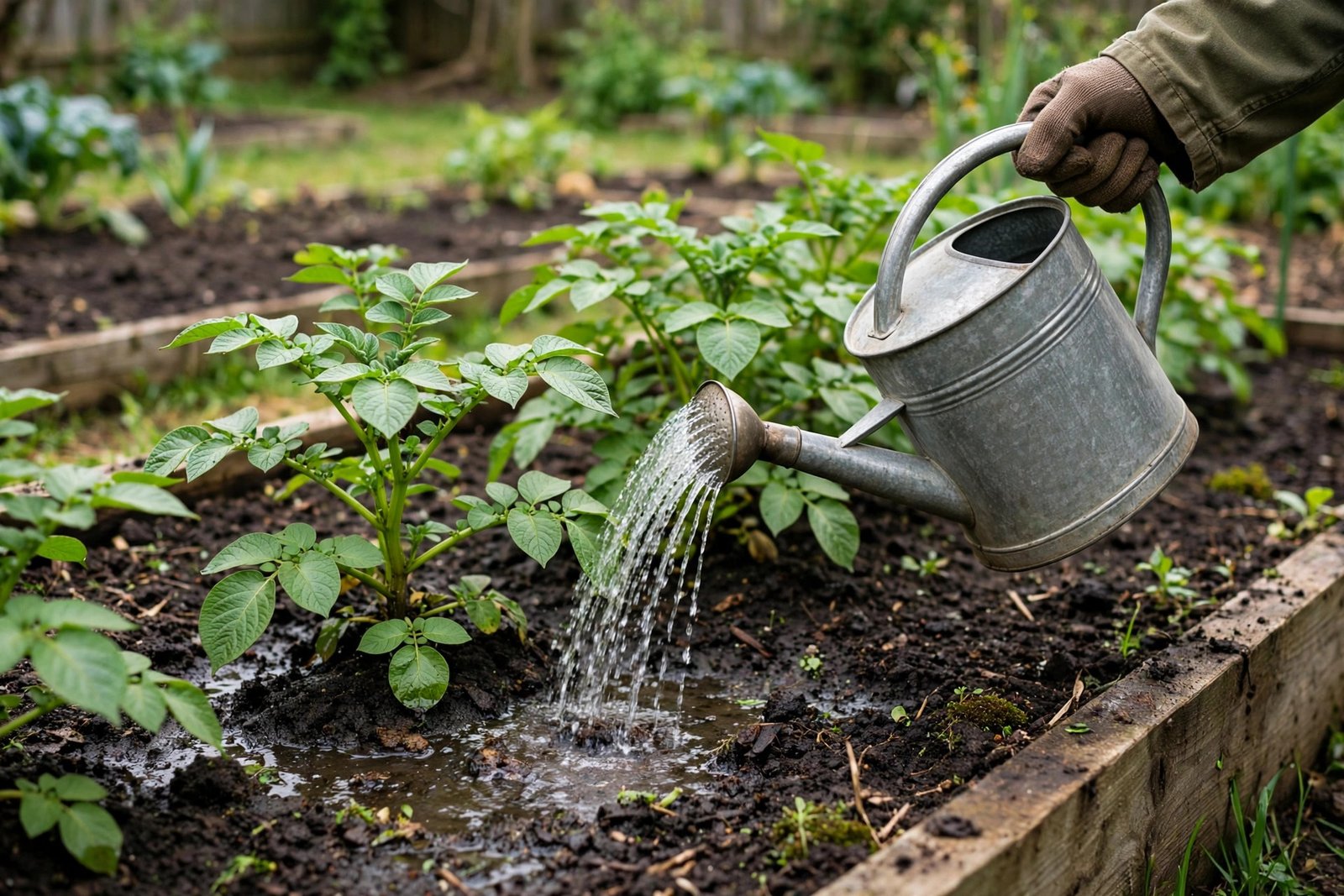
- Keep the soil moist while the tubers are forming. The first three to four weeks after tuber initiation are the window when infection happens, so water steadily through that period and do not let the bed dry out. North Dakota State University Extension reports that raising soil moisture to 80 to 85 percent during tuber initiation, until the tubers reach one to one and a half inches across, reduces potato scab. Mulch helps here, because it holds moisture in the soil and keeps the surface from drying between waterings. Our guide on how often to water potatoes covers the weekly watering routine in detail.
- Rotate the potato bed every year. Do not plant potatoes, tomatoes, peppers or eggplants in the same spot for three to four years, because the bacteria build up where potatoes keep growing. Plant corn, peas, beans or small grains in the old bed instead, and keep beets, carrots, radishes and turnips out of the rotation as well, because the same bacteria can live on those roots. Our beginner guide on how to plant potatoes covers rotation as part of planning the bed.
- Choose a variety that stands up to potato scab. Some varieties stand up to scab far better than others, and picking one of them is the easiest step on this list. Superior and Norland are the two most often recommended for home gardens, and Russet Burbank, Chieftain and Gold Rush also carry at least moderate resistance. Resistant does not mean immune, so a resistant variety still needs good soil and watering, but it will show far fewer patches than a susceptible one like Yukon Gold or Red Pontiac. Our guide on early, midseason and late potatoes explains how variety choice and maturity dates shape the season.
- Plant certified seed potatoes. Certified seed is checked for disease, and it starts the season clean, while seed saved from a scabby harvest carries the bacteria straight into the bed. Buy new certified seed each year, and do not cut seed pieces from tubers that showed scab, even if the patches look small.
- Hold back the lime, fresh manure and wood ash. All three raise the soil pH, and each one makes the bed more friendly to the bacteria that cause scab. Compost that has finished breaking down is fine, but fresh manure should go on another bed, or wait until after the potato harvest.
- Clean up after harvest. Pull up the vines, pick up small tubers and culls left in the ground, and do not leave scabby potatoes in the bed over winter, because they carry the bacteria into next spring. A clean bed and a new spot next year do more than any spray, and there is no spray a home gardener needs for this disease.
Should I lower soil pH?
Lowering the pH helps against potato scab, but only when a soil test says your soil is above 5.5, and only when you do it slowly. Elemental sulphur is the usual way to bring the pH down, and it works over weeks and months rather than days, so apply it well before planting and retest before you plant.
Do not chase a very low pH, because below 5.2 a related bacterium can cause acid scab, which looks the same and does not answer to pH at all, and very acidic soil also locks up nutrients that potatoes need. If your soil already sits between 5.0 and 5.5, leave the pH alone and put your effort into watering and resistant varieties instead. A soil test each year or two keeps the number honest, because guessing with sulphur or lime is how beds end up worse than they started.
Which varieties resist scab?
Superior and Norland are the safest first picks for a garden that has seen potato scab, and both are widely available as certified seed. Russet Burbank, Chieftain and Gold Rush also show at least moderate resistance in Extension trials, and russet skinned varieties in general tend to show less damage than smooth skinned ones.
At the other end, Yukon Gold and Red Pontiac are among the more susceptible varieties, so they are a poor choice for a bed with a scab history. Check the variety description in the seed catalogue before you order, because resistance is usually listed there, and pick the resistant variety that also fits your cooking and storage needs. Resistance is not immunity, so a resistant variety still benefits from the watering and rotation steps above.
Can scab be cured?
No, scab cannot be cured once the patches have formed, because the corky tissue is the plant’s own scar and nothing removes it from the tuber. No spray, soak or wash will undo the marks, and a product that claims to cure scab on the tuber is not worth buying. The only real answer is prevention, which means fixing the soil, the watering and the variety before the next planting, and the steps above are the ones Extension guides recommend.
What to do with scabby potatoes at harvest
Dig the potatoes as usual, brush off the loose soil, and sort the harvest into two piles, one for the clean tubers and one for the marked ones. Peel the marked potatoes and cook them first, because they are fine to eat and there is no reason to waste them. Do not save any scabby tuber for seed, even if only a small patch shows, because the bacteria travel on the skin and the next crop will start infected.
Store the clean tubers for the long term, and keep the marked ones where you will use them soon, since a damaged spot can let soft rot start in storage. If the whole harvest is heavily marked, note the bed, the variety and the watering that season, then change one thing at a time next year, starting with the variety and the watering.
FAQ
Can scab be cured?
No. Once the corky patches have formed on a tuber, nothing removes them, and no spray or wash will cure them. Prevention before planting is the only answer, so fix the soil, the watering and the variety for the next season.
Should I lower soil pH?
Only if a soil test shows your pH is above 5.5. Elemental sulphur can bring it down slowly, and you should retest before planting. If your pH is already between 5.0 and 5.5, leave it alone and work on watering and variety choice instead.
Which varieties resist scab?
Superior and Norland are the most often recommended, with Russet Burbank, Chieftain and Gold Rush also showing at least moderate resistance. Yukon Gold and Red Pontiac are more susceptible, so avoid them in a bed with a scab history.
Are scabby potatoes safe to eat?
Yes. Potato scab only marks the skin, and the flesh underneath is normal, so peel the potato and cook it as usual. Cut away any deep pits, and throw out any tuber that smells bad or feels soft and mushy.
Does scab spread to other vegetables?
The bacteria can live on beets, carrots, radishes, turnips and parsnips, so keep those root crops out of the potato rotation for three to four years. Corn, peas, beans and small grains are safe rotation crops, because the bacteria do not build up on them.
Sources and further reading
- University of Minnesota Extension, What’s wrong with my plant? Potato tuber skin discolored — https://apps.extension.umn.edu/garden/diagnose/plant/vegetable/potato/tuberdiscoloredskin.html
- Utah State University Extension, Vegetable Diseases in Utah — https://extension.usu.edu/planthealth/ipm/notes_ag/veg-diseases-utah
- Kansas State University Extension, Growing Potatoes — https://www.johnson.k-state.edu/programs/lawn-garden/agent-articles-fact-sheets-and-more/agent-articles/vegetables/growing-potatoes.html
- North Dakota State University Extension, Common Scab — https://www.ag.ndsu.edu/smallgrains/potatoes/common-scab