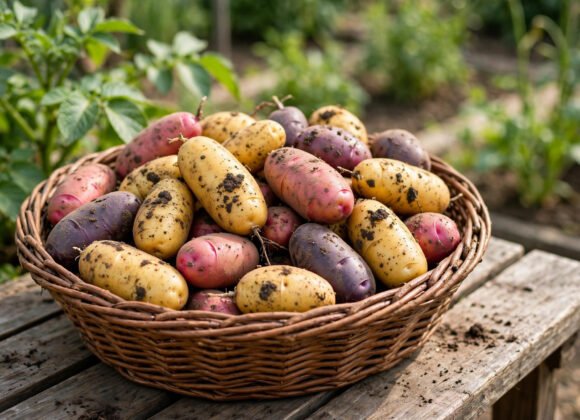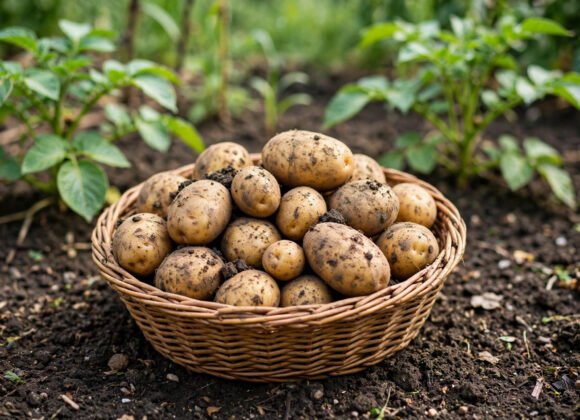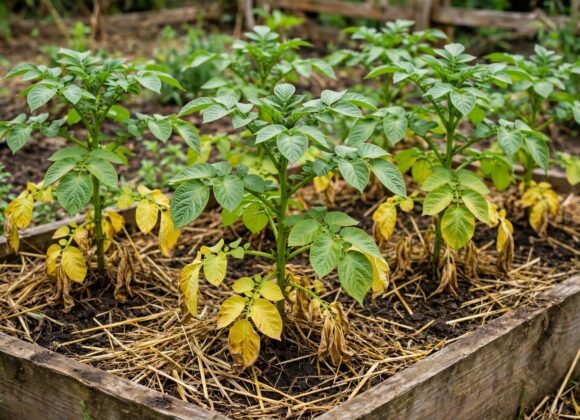
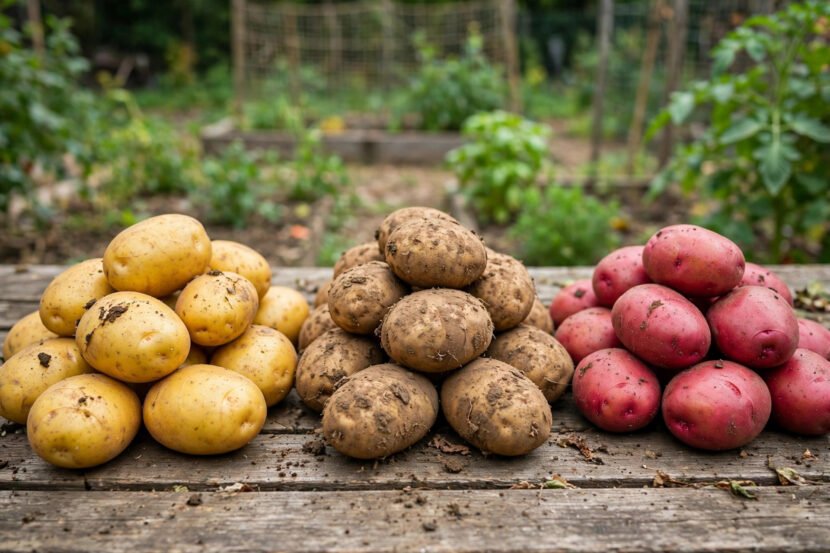
Yukon gold potatoes are the middle ground of the potato world, and that is exactly why so many home gardeners plant them first. They are not as starchy as a russet and not as waxy as a red potato, so they work for mashing, roasting, boiling and soups without ever falling apart or turning gluey.
Russets bake into a fluffy, dry flesh that is perfect for a baked potato, and red potatoes stay firm in a salad or a soup when other potatoes would break apart. This guide compares Yukon gold potatoes with russets and red potatoes side by side, so you can pick the right variety for your kitchen and your garden. The growing advice is the same for all three in most respects, but the maturity, the storage life and the best cooking use are different, and those differences are what should drive your choice.
Table of Contents
Yukon Gold vs russet vs red potatoes at a glance
The table below gives you the whole comparison in one place, and the sections after it explain each row in plain language.
| Feature | Yukon Gold | Russet | Red |
|---|---|---|---|
| Skin | Thin, smooth, golden yellow | Thick, brown, netted | Thin, smooth, red |
| Flesh | Yellow, creamy | White, dry | White, firm |
| Starch | Medium | High | Low |
| Texture when cooked | Creamy and buttery | Fluffy and mealy | Firm and waxy |
| Best for | Mashing, roasting, boiling, soups | Baking, fries, fluffy mash | Salads, boiling, soups, roasting |
| Maturity | Early to midseason, about 80 to 90 days | Late, about 110 days or more | Early, about 70 to 80 days |
| Storage | Good when cured and kept cool | Longest of the three | Best eaten sooner |

What starch does to a potato
Starch is the one thing that decides how a potato behaves when you cook it, so it is worth understanding before you choose a variety. A potato with high starch and low moisture turns dry and fluffy when it is cooked, and that is the russet. A potato with low starch and high moisture stays firm and moist, and that is the red potato. A potato in the middle keeps some firmness and some creaminess at the same time, and that is where Yukon gold potatoes sit.
The University of Minnesota Extension puts it plainly in its potato guide. It says mealy or dry fleshed potatoes like russets are good for baking, frying and mashing, because they will not turn gluey and they absorb butter or gravy well, while waxy or moist fleshed round potatoes hold together when cooked, so they suit soups, curries and salads.
It also says many varieties fall somewhere in between, and it names Yukon Gold as the example of an all purpose potato that has a balance of waxy and mealy starches. That balance is the whole reason Yukon gold potatoes are the safest single variety for a home garden, because they do a good job in more dishes than either of the other two.
Kansas State University Extension makes the same point in its own words. It says the russet varieties are particularly good for baking because they have a mealy, crumbly texture when baked, while white or red varieties are usually preferred for boiling or mashing. The lesson for a gardener is simple, and it is that you should match the variety to the dish you cook most, not to the variety you have heard the most about.
Yukon Gold potatoes: the all-purpose choice
Yukon gold potatoes have thin golden skin and yellow flesh, and the flesh has a naturally buttery flavour that shows even with very little butter added. They are medium in starch, so they mash into a creamy texture without turning sticky, they roast into crisp edges with a soft centre, and they hold together well enough for soups and stews. If you cook with potatoes several different ways during the week, Yukon gold potatoes are the variety that covers the most ground.
Yukon Gold potatoes are an early to midseason variety, so they are usually ready in about 80 to 90 days from planting, which fits comfortably into most US growing seasons. That timing matters, because a late variety like Russet Burbank needs a long season and can run into summer heat in warmer zones, while Yukon Gold potatoes finish earlier and leave you room to plant a second crop or to rest the bed. Our guide on early, midseason and late potatoes explains the maturity classes and how to match a variety to the length of your season.
Yukon gold potatoes also store well when they are handled right. Cure them for 10 to 14 days in a dark, ventilated place at about 50 to 60 degrees Fahrenheit, then keep them cool, dark and ventilated, and they should keep for months. Our guide on how to cure potatoes covers the curing step, and our guide on how to store potatoes covers temperature and containers in detail.
The one weakness of Yukon gold potatoes is that they are not the best at any single dish. A russet makes a fluffier baked potato, and a red potato holds its shape better in a salad. Yukon Gold wins on range, not on any one specialty, so if you want the very best baked potato or the very firmest salad potato, you should grow a second variety alongside it.
Russet potatoes: the baking potato
Russet potatoes are the classic baking potato, and they are easy to recognise by their thick, rough, brown netted skin and their white, dry flesh. They are high in starch and low in moisture, so they cook up light and fluffy, and that is why they are the standard choice for baked potatoes, french fries and fluffy mashed potatoes. The University of Minnesota Extension says russet types are starchy with brown skins and are good for baking, and Kansas State University Extension says the same, because russets have a mealy, crumbly texture when baked.
The most widely grown russet is Russet Burbank, and Utah State University Extension lists it alongside Butte, Gem Russet and Ranger Russet as the russet types it recommends. Russet Burbank is a late variety, so it usually needs about 110 days or more to mature, which means it needs the longest season of the three types in this guide. Gardeners in warm climates should plant russets early so the tubers finish sizing up before the worst summer heat, and gardeners in short season areas should check the days to maturity on the seed packet before they buy.
Russets are also the best storers of the three types. Their thick skins protect them in storage, and a well cured russet crop kept cool, dark and ventilated will usually outlast both Yukon Gold and red potatoes. That makes russets the practical choice if you want to eat from your own harvest deep into winter, and our guide on how many potatoes per plant will help you plan how much to plant for a winter supply.
The weakness of russets is that they fall apart in wet dishes. A russet will break into pieces in a soup or a potato salad, and it will absorb too much water when it is boiled for a salad. If you mostly make soups and salads, russets are the wrong first choice, and you should grow red potatoes or Yukon gold potatoes instead.
Red potatoes: the shape holders
Red potatoes have thin, smooth red skin and white flesh, and they are the firmest of the three types. They are low in starch and high in moisture, so they hold their shape when they are boiled, roasted or simmered, and that is why they are the standard choice for potato salads, soups and stews. The University of Minnesota Extension notes that red potatoes can be starchy or waxy in texture, but the common table reds like Red Norland and Red Pontiac are waxy enough to stay firm in a salad, and Kansas State University Extension lists Red Norland, La Rouge, La Soda, Viking and Reddale among the common red skinned varieties.
Red potatoes are usually the earliest of the three types to mature. Red Norland, the most common red variety, is an early potato that is often ready in about 70 to 80 days, so it is a good choice for gardeners with short seasons and for anyone who wants new potatoes early in summer. You can dig red potatoes young for tender new potatoes about seven to eight weeks after planting, and the skins are thin enough that you can leave them on for most dishes. Our guide on when to harvest potatoes explains the skin set test that tells you when the tubers are ready.
Red potatoes are also the most forgiving of the three in the kitchen, because they are hard to overcook into mush, and that makes them a good choice for a beginner cook. In the garden they are no harder to grow than the other two, and they need the same sun, soil, water and hilling. Their one weakness is storage, because their thin skins dry out faster than a russet skin, so red potatoes are best eaten sooner and are not the variety to rely on for a long winter supply.
Do they grow differently?
The three types grow in almost exactly the same way, and a gardener who can grow one of them can grow all three. All three need full sun, loose and well drained soil, steady water and regular hilling, and all three should be started from certified seed potatoes rather than grocery store potatoes, because certified seed is grown to reduce disease. The University of Minnesota Extension, Utah State University Extension and Kansas State University Extension all give the same advice on this point, and it matters for every variety, because grocery store potatoes may carry disease and are often treated to stop sprouting.
Plant the seed pieces 4 to 6 inches deep and 10 to 12 inches apart in rows 30 to 36 inches apart, with the eyes facing up, and plant when the soil is consistently 45 to 50 degrees Fahrenheit. Utah State University Extension gives the same spacing, at 4 to 6 inches deep and 10 to 12 inches apart with rows 30 to 36 inches apart, and the University of Minnesota Extension gives the same figures. Our step by step guide on how to plant potatoes covers the full method, and our guide on how to prepare seed potatoes covers chitting and cutting before planting.
The real differences in the garden are timing and harvest. Red potatoes finish first, Yukon gold potatoes finish in the middle, and russets finish last, so you can stagger your harvest by growing one of each. If you plant all three on the same day, the reds will be ready first, the Yukon Golds a week or two later, and the russets last, which spreads the work of digging and curing across several weeks instead of piling it into one weekend. That is a practical reason to grow all three, even if you only have a small bed.
Watering and hilling are the same for all three types. Give the plants 1 to 2 inches of water per week while the tubers are forming, and mulch with straw to hold the moisture and keep the soil cool. Hill the plants as they grow, starting when the stems are about a foot tall, because hilling covers the developing tubers and stops them turning green in the light. Green tubers contain solanine, a natural toxin, and heavily green tubers should not be eaten. Our guide on how often to water potatoes covers the weekly inch rule, and our guide on how to hill potatoes explains the timing and the method.
Disease pressure is the same for all three types as well, because they are all potatoes and they share the same pests and diseases. Choose certified seed, rotate the bed so potatoes do not follow tomatoes, peppers or eggplants, and keep the leaves dry by watering at soil level. If you have had scab in your soil before, check the seed catalogue for resistant varieties, because the University of Minnesota Extension says choosing a resistant or tolerant variety is a good way to prevent future disease problems. Our guide on potato scab prevention explains how scab works and which varieties resist it, and our guide on potato blight covers early and late blight.
All three types grow well in raised beds and in containers, and the same container rules apply to each. Use at least a 5 gallon container for one seed piece and a 10 gallon container for two, and use loose potting mix rather than garden soil. Our guide on growing potatoes in raised beds covers soil mix, depth and spacing for beds, and our guide on how to grow potatoes in containers covers pots and grow bags.
Which potato stores longest?
Russets store longest, because their thick skins protect them in storage and they cure into a tough, long keeping tuber. A well cured russet crop kept cool, dark and ventilated will usually last the longest of the three, and that is why russets are the standard storage potato for gardeners who want to eat from their own harvest through winter.
Yukon gold potatoes store well too, and they are a good second choice for storage. Cure them properly, keep them at about 40 to 45 degrees Fahrenheit in the dark, and check them every few weeks for soft spots or sprouting. They will not usually outlast russets, but a well cured crop should still keep for months.
Red potatoes store the shortest of the three, because their thin skins lose moisture faster in storage. That does not make them a bad variety, and it only means you should eat the red potatoes first and save the russets and the Yukon Golds for later in winter. Our guide on how to store potatoes covers containers, temperature and the regular check in detail, and our guide on how to harvest potatoes covers the digging method and the rule to use damaged tubers first.
Which potato should you grow?
If you can grow only one variety, plant Yukon Gold potatoes, because Yukon gold potatoes do the most jobs well and they fit the widest range of dishes and seasons. They mash creamy, roast crisp, boil without falling apart, and store well, and they mature in the middle of the season, so they suit most gardens. That all round performance is why Yukon Gold is the variety most home gardeners reach for first.
If you love baked potatoes, fluffy mash and fries, add a russet, because no other potato bakes as light and fluffy as a russet. Russet Burbank is the classic choice, and it stores the longest, so it is the variety to grow if you want a winter supply. Just remember that it needs the longest season, so plant it early and give it room.
If you make a lot of potato salads, soups and stews, add a red potato, because red potatoes hold their shape when other potatoes fall apart. Red Norland is the easiest red to find as seed, and it matures earliest, so it gives you the first new potatoes of the season.
If you have room for three varieties, grow all three, because each one covers a dish the others do not, and the staggered harvest spreads the work across the season. Plant the reds, the Yukon Golds and the russets on the same day, and you will dig the reds first, the Yukon Golds next and the russets last. If you want more colour on the plate, add a purple variety as well, and our guide on purple potatoes covers the varieties and the growing tips. If you like small waxy tubers for roasting, add a fingerling too, and our guide on how to grow fingerling potatoes covers the varieties and the spacing.
FAQ
Are Yukon Golds better than Russets?
It depends on what you cook most, because neither one is better at everything. Yukon Golds are better as an all purpose potato, because they mash creamy, roast well, boil without falling apart and work in soups. Russets are better for baking, fries and fluffy mashed potatoes, because their high starch and low moisture cook up light and dry. If you can grow only one variety, Yukon Gold potatoes are the safer choice, and if you bake potatoes often, add a russet as well.
Which potato holds its shape in soup?
Red potatoes hold their shape best in soup, because they are low in starch and high in moisture, so they stay firm when they are simmered. Yukon gold potatoes hold their shape fairly well in soup too, because their medium starch gives them some firmness, and they are a good second choice. Russets are the worst choice for soup, because their high starch makes them break apart and thicken the soup into a starchy mush.
Which is best for mash?
It depends on the mash you want. Russets make the fluffiest mashed potatoes, because their high starch and low moisture cook up light and dry, and they absorb butter and milk well without turning gluey. Yukon gold potatoes make the creamiest mashed potatoes, because their yellow flesh is naturally buttery and their medium starch gives a smooth, rich texture. Red potatoes are the least suited to mashing, because their waxy flesh can turn sticky when it is mashed.
Do they grow differently?
No, the three types grow in almost exactly the same way, and they need the same sun, soil, water and hilling. Plant them 4 to 6 inches deep and 10 to 12 inches apart in rows 30 to 36 inches apart, water 1 to 2 inches per week, and hill as the plants grow. The only real difference is timing, because red potatoes mature earliest, Yukon gold potatoes mature in the middle, and russets mature last, so a mixed planting staggers your harvest.
Which stores longest?
Russets store longest, because their thick skins protect them in storage and they cure into a tough, long keeping tuber. Yukon gold potatoes store well too, and a well cured crop kept cool, dark and ventilated should keep for months, but they will not usually outlast russets. Red potatoes store the shortest of the three, because their thin skins dry out faster, so eat the red potatoes first and save the russets and the Yukon Golds for later in winter.
Sources and further reading
- University of Minnesota Extension, Growing potatoes in home gardens: https://extension.umn.edu/vegetables/growing-potatoes-home-gardens
- Utah State University Extension, Potatoes in the Garden: https://extension.usu.edu/yardandgarden/research/potatoes-in-the-garden
- Kansas State University Extension, Growing Potatoes: https://www.johnson.k-state.edu/lawn-garden/agent-articles/vegetables/growing-potatoes.html
- North Dakota State University Extension, Management of Potato Diseases in the Home Garden: https://www.ag.ndsu.edu/gptpc/potatoes/Mgmtofpotatodiseasesinhomegarden.pdf